Global buyers choosing a Stainless Steel Smartwatch Band need more than a polished product photo. They need dependable fit, comfortable links, secure connectors, and clear sizing information. A bracelet that looks elegant on a screen may pinch at the wrist or feel heavy after a full workday. Small details matter.
Watchmaking authority George Daniels described a watch as “a machine for telling the time.” His observation offers a useful reminder: appearance should support everyday function. For smartwatch bands, that means checking connector compatibility, clasp security, edge finishing, and adjustment options. A smooth underside can reduce irritation. Removable links help buyers achieve a closer fit. Still, no single design suits every wrist or device.
This guide reviews leading options for 2026 through a buyer-focused lens. It considers material consistency, construction, comfort, style, and practical value across international sourcing needs. Stainless steel grades and surface treatments can vary, so product descriptions deserve careful scrutiny. Photos alone are not proof. Ask for dimensions, compatibility details, and sample units when evaluating suppliers. Even then, testing takes time. That is easy to underestimate.
Expect trade-offs. A heavier band may feel reassuring but become tiring; a lighter one may sacrifice a substantial feel. Price does not guarantee a better clasp or finish. The strongest choice is the one that fits the device, the wrist, and the intended use—with evidence to support each claim.
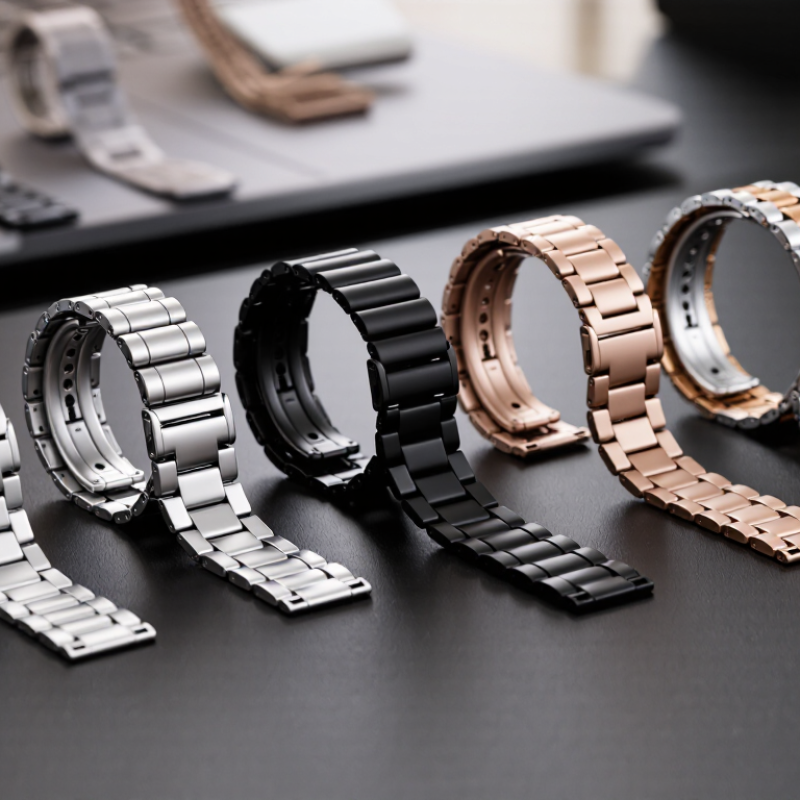
A stainless steel smartwatch band is a wrist strap made from linked metal segments, woven mesh, or a solid, shaped section. Small pins or spring bars connect it to the watch case; a clasp holds it closed. The watch’s processor, screen, and sensors remain in the case. The band does not power the watch or measure health data. It mainly keeps the case positioned against the wrist. Fit matters. IDC’s Worldwide Quarterly Wearable Device Tracker estimated 538.6 million wearable-device shipments in 2024. That figure covers devices, not bands, but it shows the scale of the wider category.
Compatibility starts with the connector and case width, not just the band’s listed size. Some bands need a tool to remove links; others use a sliding clasp for quick adjustment. A snug fit helps keep wrist sensors in contact with skin, but overtightening can feel uncomfortable. Small parts matter. Stainless steel resists everyday corrosion, yet sweat, salt, and residue can collect around pins and clasp joints. Rinse and dry the band after heavy perspiration. Common grades such as 316L are used for corrosion resistance, but the grade alone cannot prove careful finishing or reliable construction. Metal may also feel cold and heavier than a silicone strap. That trade-off is easy to underestimate. Check clasp security, smooth edges, and the maker’s stated steel grade before buying.
Stainless steel smartwatch bands differ in more than appearance. Common options include 304 and 316L stainless steel; 316L generally offers better resistance to corrosion, though performance depends on the alloy, finish, and daily care. For humid travel or frequent handwashing, buyers should check the stated material grade rather than rely on a silver-colored surface. It is not automatic.
Finishes change both the look and upkeep. Polished links reflect light and show fingerprints more readily, while brushed surfaces tend to disguise small marks. PVD coatings can add color, but their wear resistance varies with coating quality and use. Ask suppliers how the finish is tested, and inspect sample edges for uneven color. Small details matter.
Construction affects comfort and repairability. Solid links usually feel more substantial than folded links, but weight and fit matter more than appearance alone. Check whether the band uses removable links, screws, or friction pins, and confirm the clasp closes securely without pinching skin. Curved end links may sit neatly against one watch case, yet fail to fit another. Measure lug width and verify case compatibility before ordering. A common oversight is buying for finish first, then discovering the adjustment range is too limited.
Compatibility starts at the connector, not the watch face. Stainless steel bands may look similar, yet their end pieces and lug widths can differ. Check the watch model’s supported attachment type and measure the space between its lugs before ordering. Some cases use shaped connectors, so matching the width alone may not be enough. Small details matter.
For sizing, measure your wrist where the watch normally sits, using a flexible tape or a strip of paper. Compare that measurement with the band’s stated range, then check whether removable links are included. A metal band should rest securely without pinching or sliding toward your hand. Measure twice. If you fall between sizes, choose a design that allows link adjustment or offers a micro-adjustment clasp.
Fit can change with heat, activity, and personal preference. Leave enough room for a fingertip beneath the band, but not so much that the watch turns around your wrist. Check that the clasp closes smoothly and that no sharp edges touch your skin. For international orders, confirm measurements in millimeters and review the return policy before purchase. Compatibility charts are useful, but they can be incomplete; verify the connector details when uncertain. A careful fit check takes a few minutes, and it can prevent an awkward return.
A stainless steel smartwatch band should feel secure without pinching or sliding when your wrist moves. Check the links, clasp, and edges in person or through detailed product specifications. Links should sit evenly, with no sharp corners or visible gaps. A smooth finish matters. Small flaws can catch on sleeves or irritate skin during a long day.
Compare comfort and durability together, not as separate claims. A heavier band may feel sturdy, but it can become tiring during exercise or extended wear. Look for adjustable links and a clasp that closes firmly without needing excessive force. Ask how the steel is finished and whether replacement links are available. Sweat and frequent contact can affect the finish over time. Even good steel needs care.
Tips: Check the clasp several times before buying. If possible, wear the band for an hour and notice pressure points. Wipe it dry after workouts, and inspect the pins occasionally. Fit can be surprisingly personal; a band that looks ideal online may feel awkward on your wrist.
A practical comparison of common stainless steel band constructions. Weight and fit vary by band width, watch-case size, clasp, and link design; use the figures below as indicative ranges rather than guaranteed specifications.
| Band Construction | Common Steel Options | Indicative Band Weight | Comfort and Fit | Durability Considerations | Adjustment and Closure | Best Suited To | Buyer Checks |
|---|---|---|---|---|---|---|---|
| Milanese mesh | Often 304 or 316L stainless steel; confirm the specified grade and material documentation. | About 20–45 g for many standard-width bands. | Flexible mesh follows the wrist and allows airflow. Fine mesh can feel smooth, while rough edges or a bulky clasp may cause discomfort. | Corrosion resistance depends on the steel grade, finish, and care. Fine mesh can snag on fabric or collect debris between strands. | Commonly uses a sliding magnetic or folding clasp. Check that the clasp locks securely and is compatible with the wearer’s needs. | Everyday wear, warm climates, and users who want a lightweight, adjustable band. | Inspect edge finishing, mesh consistency, clasp security, and whether the adjustment mechanism can be repositioned without tools. |
| Solid-link bracelet | Commonly offered in 304 or 316L stainless steel. Grade alone does not establish overall build quality. | About 55–100 g; larger or thicker designs may weigh more. | Rigid links provide a substantial feel but can be heavier and less flexible than mesh. Proper sizing helps prevent pinching and excess movement. | Solid links are generally more substantial than hollow links. Pins, screws, and clasp components are wear points that should be checked. | Usually adjusted by removing links with pins or screws; may have a folding or deployant-style clasp. | Buyers seeking a classic bracelet appearance and a sturdy, weightier feel. | Ask whether links are solid or hollow, how links are removed, and whether spare pins or screws are supplied. |
| Three-link bracelet | Often made from 304 or 316L stainless steel, depending on the product specification. | About 45–85 g for many standard-width designs. | Articulated links can drape comfortably when sized correctly. A poorly finished underside or loose fit may catch hair or shift on the wrist. | Check link articulation, pin retention, and clasp wear. Brushed surfaces can show scratches differently from polished surfaces. | Typically sized by removing links; some clasps include small step adjustments for fine-tuning. | Daily use and buyers who prefer a familiar, balanced bracelet style. | Check for smooth link edges, consistent gaps, secure pins, and a clasp that closes evenly. |
| Beads-of-rice bracelet | Usually specified as a stainless steel alloy such as 304 or 316L; verify the stated grade with the supplier. | About 40–75 g, depending on link size and band width. | Many small articulated links can create a flexible drape. The numerous contact points may feel less comfortable if edges are rough or the band is too tight. | Frequent articulation points require consistent finishing and secure link construction. Dirt may accumulate between small links. | Generally sized by removing links; clasp designs vary and may offer limited fine adjustment. | Buyers who want a flexible, detailed bracelet style with a softer drape than larger links. | Inspect articulation for smooth movement and check that link removal and replacement are supported. |
| Expandable stretch bracelet | May use stainless steel outer links with elastic or spring components; confirm which parts are stainless steel. | About 30–70 g, depending on construction and size. | Slides on and off without a traditional clasp and can accommodate a range of wrist sizes. Fit may loosen or feel tight if the size range is unsuitable. | Elastic or spring elements can wear over time and may be harder to replace than ordinary bracelet pins. | Usually has no conventional clasp; sizing is selected to match the wrist and the band’s stated stretch range. | Users who prioritize quick on-and-off wear and do not need a highly adjustable clasp. | Confirm the stated wrist-size range, replacement options for internal components, and the steel composition of all exposed parts. |
| Fine-link mesh bracelet | Commonly specified as 304 or 316L stainless steel; surface coatings, if present, are separate from the base-metal grade. | About 20–50 g for many standard-width models. | Small links offer flexibility and ventilation. Comfort depends on smooth edges, mesh density, and the profile of the clasp. | Thin wire or links can deform more easily than solid bracelet links. Coatings may wear differently from the underlying steel. | May use a folding clasp, sliding clasp, or removable-link sizing system. | Buyers seeking a lighter bracelet with a more formal appearance than coarse mesh. | Ask about wire or link thickness, coating type, clasp retention, and care instructions for the finish. |
Comparison note: Stainless steel is not automatically waterproof or scratch-proof. Performance depends on alloy, manufacturing quality, finish, and maintenance. Before purchase, confirm connector compatibility, band width, wrist-size range, material grade, clasp security, and the supplier’s stated testing or inspection documentation. Weight ranges are indicative and should be verified against the exact product specification.
Global buyers evaluating stainless steel smartwatch bands in 2026 should look beyond polished product photos. Material grade, surface finish, and clasp construction affect both comfort and durability. Ask suppliers to identify the steel grade and provide relevant material documentation. A sample can reveal rough edges, uneven brushing, or a clasp that opens too easily. Small flaws matter on a band worn every day.
Compatibility deserves careful checking. Confirm the watch-case connection, lug width, and band length against the exact device model. Measure the wearer’s wrist, too; a standard link count may not fit everyone. Check whether removable links need a special tool and whether spare pins are included. That assumption can fail. A secure clasp should close firmly without pinching skin, while adjustable links make fitting easier.
For larger orders, compare sample quality with production specifications before confirming quantities. Request clear details on finish, packaging, lead time, and replacement procedures for defective pieces. Ask how the supplier controls scratches during packing; metal links can mark each other in transit. Freight costs and delivery estimates may shift by destination, so verify them in writing. A lower unit price is tempting, but inconsistent batches can cost more in returns and delays. Some details remain easy to overlook. Inspect a production sample where possible, and keep approved specifications on record.
Typical alloy composition ranges help buyers compare common stainless steel grades. Chromium supports corrosion resistance; molybdenum in 316 can improve resistance to chloride exposure.
Composition ranges shown are typical ASTM A240/A240M limits by weight; specifications can vary by product and standard.
It generally resists corrosion better than 304 steel, but care and finish also matter. Check the stated grade, especially for humid weather or frequent handwashing. The label alone is not a guarantee.
Brushed surfaces tend to disguise small scratches and fingerprints. Polished links reflect more light, but show smudges readily. A sample edge can reveal uneven color or rough finishing.
Confirm the exact case connection and lug width before ordering. Measure your wrist and compare it with the band’s adjustment range. Curved end links may fit one case and not another.
It should stay secure without sliding or pinching when your wrist moves. Check for sharp edges, gaps, and pressure points. Try wearing it for an hour if possible.
Not necessarily. Solid links often feel more substantial than folded links, but extra weight can tire your wrist during exercise. Appearance can distract from comfort.
The clasp should close firmly without excessive force or pinching skin. Check whether links use screws, removable pins, or another adjustment method. Spare pins may not be included.
Wipe it dry after workouts and inspect the pins occasionally. Sweat and frequent contact can affect the finish over time. Small routine checks are easy to forget.
Compare a sample with the written production specifications. Confirm the finish, packaging, lead time, and replacement process for defective pieces. Ask how metal links are protected from scratches during shipping. A low price may cost more later.
A Stainless Steel Smartwatch Band combines the strength of metal with the adjustable design needed for everyday smartwatch use. Its links, mesh, or other construction styles attach to a watch through compatible connectors, while materials and finishes influence appearance, weight, and resistance to wear. Understanding connector types, case dimensions, wrist measurements, and adjustment options helps buyers find a secure, comfortable fit across different smartwatch models. A well-chosen band should sit comfortably without pinching or shifting, with smooth edges, reliable fasteners, and solid construction contributing to lasting performance.
For global buyers in 2026, comparing bands means looking beyond appearance. Consider material quality, finish consistency, link or mesh craftsmanship, clasp security, ease of resizing, and comfort in different climates and daily activities. Also check product measurements, compatibility details, packaging, shipping expectations, and supplier communication before purchasing. These practical considerations make it easier to select a durable band that suits both the intended watch and the needs of its wearer.

Dispatched from our UK warehouse with tracked shipping.
Every smartwatch and audio product is covered as standard.
One companion app across the whole product ecosystem.
Pairing, firmware and accessory help from our support team.
