Free UK shipping  ·  2-year guarantee on every smartwatch  ·  iOS & Android compatible
0%

Choosing True Wireless Stereo Earbuds is less about chasing the longest feature list and more about finding a reliable fit for your daily routine. Audio researcher Dr. Sean Olive’s work supports a useful principle: listeners do not all prefer the same sound. That is a paraphrase of his research, not a direct quotation. It matters when comparing earbuds, because a vivid bass demo may sound exciting in a shop but tiring during a long commute.

Fit matters. A secure seal affects bass, comfort, and noise isolation. Try different ear tips if the first pair slips or feels pressurized. Then compare active noise cancellation, transparency mode, microphone clarity, and battery life under realistic conditions. A call beside a busy street can reveal more than a quiet-room demo. Check whether the earbuds support the Bluetooth features your phone can actually use; a premium codec is not helpful if your device does not support it.

Tiny details count. Look for clear return terms, practical water resistance, and a case that fits your pocket. Treat advertised battery figures as estimates, since volume and ANC can change real-world results. One overlooked question is comfort after two hours, not just two minutes. And a high price does not guarantee a better match. This guide will help you weigh these trade-offs with evidence and everyday use in mind. Some preferences remain subjective, so test where you can.
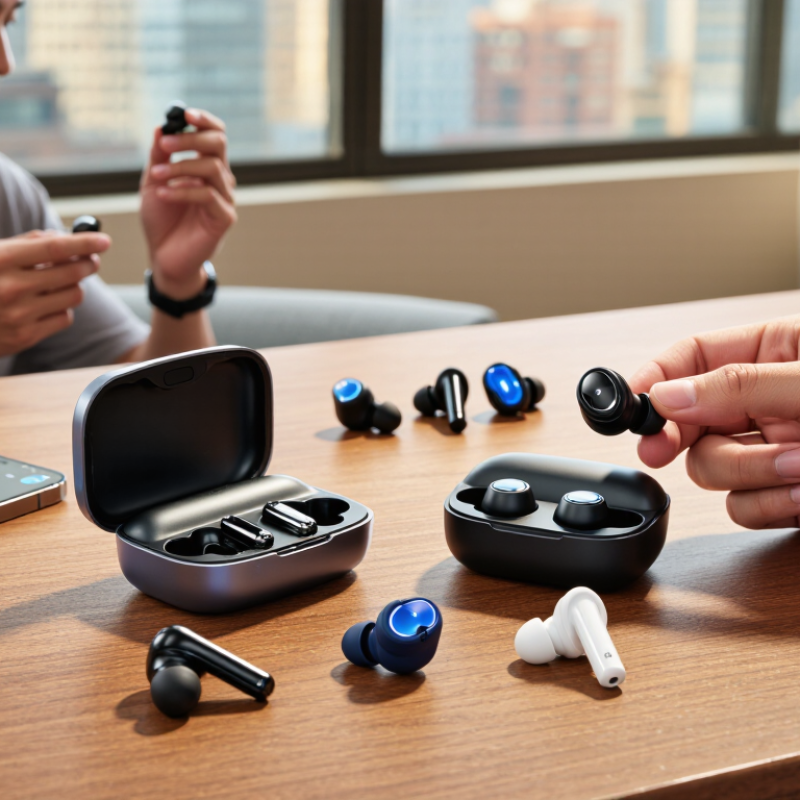
How to Choose True Wireless Stereo Earbuds

Identify Your Listening Needs and Use Cases

How to Choose True Wireless Stereo Earbuds

Identify your listening needs before comparing features. For a noisy commute, prioritize secure-fitting earbuds and effective noise reduction; test the fit by turning your head, not just sitting still. For calls, check microphone performance in wind or beside traffic. At a desk, comfort over several hours may matter more than maximum bass. Canalys estimated global TWS shipments reached 289 million units in 2023, up 6.5% year over year. That crowded market makes a personal use-case checklist more useful than a long feature list.

Consider your actual routine. Do you switch between a laptop and phone? Look for easy device switching. Exercise outdoors? A stable fit and water resistance may be practical. The WHO-ITU safe-listening standard recommends adults limit listening to 80 dB for up to 40 hours weekly. This is a useful reference, not a reason to ignore discomfort. My checklist can still miss small annoyances, like pressure after an hour.

Tips: Write down your three most common listening situations. Try earbuds for at least 15 minutes, and check whether controls work with gloves or wet fingers. If you cannot test them, read independent reviews that describe fit and call quality, not only sound impressions. Don’t pay extra for features you rarely use.

Check Fit, Comfort, and Earbud Design

Choosing true wireless stereo earbuds starts with how they sit in your ears, not how they look in a case. Try several tip sizes if available. A seal should feel secure, but not like a cork pushed too deep. Wear each earbud for ten minutes, then walk, turn your head, and chew. Does it shift? Does pressure build? Comfort is personal. A fit that feels fine for a quick test may irritate during a commute.

Pay attention to shape and weight. A rounded housing may press against a small outer ear, while a longer stem can catch on a hat or hair. Controls should be reachable without forcing the earbud inward. If the left and right ears differ, using different tip sizes is perfectly reasonable. Small details matter. Still, fit tests are imperfect; a quiet shop cannot mimic a crowded train or a long workday.

A stable seal also affects sound: weak contact can reduce bass and make music seem thinner, tempting some listeners to raise the volume. The World Health Organization’s 2021 World Report on Hearing estimates that nearly 2.5 billion people will have some degree of hearing loss by 2050, with at least 700 million needing rehabilitation. That figure is not specific to earbuds, but it reinforces the value of comfortable listening habits. Check for steady sound at a modest volume, and take a break if your ears feel sore or blocked.

How to Choose True Wireless Stereo Earbuds — Check Fit, Comfort, and Earbud Design
Earbud design Fit and retention Comfort considerations Sound isolation Best suited to What to check before choosing
In-ear with silicone tips A soft tip sits in the ear canal; several tip sizes are commonly included. A correctly sized tip should seal without painful pressure. A poor fit may feel loose or create excessive pressure. Usually provides passive isolation when the tip forms a good seal. Everyday listening, commuting, and users who want a more secure seal. Try different tip sizes on both ears. Check that the earbuds stay in place when you move your jaw or turn your head.
In-ear with foam tips Compressible foam expands gently in the ear canal and adapts to its shape. Can feel snug and conforming, but some users may prefer the feel of silicone. Foam tips generally need periodic replacement. Often offers substantial passive isolation when fitted correctly. Listening in noisy environments and users who find a suitable foam fit comfortable. Follow the fitting instructions, allow the foam to expand, and check replacement guidance and tip availability.
Open-fit hard shell Rests at the entrance of the ear rather than forming a seal in the ear canal. Avoids an in-canal tip, but the fixed shell shape may not fit every ear securely. Provides little passive isolation; outside sounds remain more audible. Users who dislike in-ear tips or prefer to remain more aware of nearby sounds. Check that the shell sits securely without pressure. Consider whether reduced isolation suits your listening environment.
Ear-hook design A hook curves around the outer ear to help hold the earbud in place. Can reduce reliance on a snug ear-canal fit, though the hook shape and contact points must suit the ear. Depends on the speaker placement and whether the design also uses an ear tip; the hook itself does not create a seal. Exercise and other activities where extra retention is useful. Check hook flexibility, contact comfort, and stability during head movement. Confirm the design is comfortable with glasses if relevant.
In-ear with stabilizing wing or fin A small wing or fin rests against part of the outer ear to help limit movement. Can improve stability, but an incorrectly shaped or oversized wing may press against the ear. Isolation mainly depends on the ear tip and its seal, not the stabilizer. Active use when standard in-ear earbuds tend to shift during movement. Look for interchangeable wing sizes where available. Check for pressure after wearing the earbuds for several minutes.
Stem-style in-ear design A short stem extends below the earbud body; fit is determined mainly by the tip and housing angle. Comfort varies with ear shape, stem length, and how the housing rests against the outer ear. Typically depends on the ear-tip seal. Users who prefer a compact in-ear design with an accessible stem for handling or controls. Check that the housing does not press uncomfortably against the outer ear and that the stem does not catch on clothing.
General fit check Both earbuds should remain stable during ordinary head movement and light activity. Comfort should remain acceptable after several minutes; pain, numbness, or persistent pressure suggests a poor fit. A consistent seal can improve passive isolation and help keep sound more balanced between ears. All users, regardless of earbud style. Test each ear separately, try available sizes, and follow the manufacturer’s cleaning and fitting instructions. Never force an earbud into the ear.

Compare Sound Quality, Connectivity, and Controls

Choosing true wireless stereo earbuds means comparing sound, connection stability, and everyday controls—not just bass claims. Listen to familiar music at a comfortable volume. Vocals should sound clear, while kick drums stay firm rather than boomy. If possible, test several ear-tip sizes; a loose seal can weaken bass and make noise reduction less effective. Specs help, but fit is personal.

Connectivity matters when walking between rooms or switching between a phone and laptop. The Bluetooth SIG’s 2024 Market Update projects more than 5.4 billion Bluetooth device shipments annually by 2028, across product categories. That forecast is not earbud-specific, but it shows how central Bluetooth has become. Check the supported Bluetooth version, multipoint capability, and connection behavior in a busy café. A brief dropout is annoying. Controls matter too: try taps with damp fingers and confirm that volume, calls, and track changes are easy to distinguish.

Tips: Before buying, test the controls without looking and make a short call outdoors. Compare speech clarity in light traffic. Read independent lab measurements where available, but treat them as one input, not a verdict. I’ve found touch controls can feel sleek indoors and frustrating with gloves; that trade-off is easy to overlook.

Evaluate Battery Life, Durability, and Extra Features

A useful battery claim is not just “up to eight hours.” Check whether that figure includes active noise cancellation, then compare it with independent listening tests. Battery University’s BU-808 technical review describes roughly 300–500 charge cycles as typical for many lithium-ion batteries, though earbud cells and charging habits vary. Treat that range as context, not a lifespan promise. A charging case should fit your routine: if you commute, check how many full recharges it provides and whether its size is comfortable in a pocket. Tiny cases are easy to carry. They can be easy to lose, too.

Durability needs more than a tough-looking shell. An IPX4 rating, based on the IEC 60529 ingress-protection standard, indicates resistance to splashing water; it does not certify dust protection or safe use while submerged. Check hinge strength, ear-tip fit, and whether replacement tips are available. Bluetooth SIG’s 2024 Market Update projects annual Bluetooth device shipments will reach 7.6 billion by 2028, making connection options worth comparing. Multipoint pairing helps switch between a laptop and phone, while transparency mode can make street sounds easier to hear. These features may cost battery life or add fiddly controls. I’d still prioritize a secure fit; a brilliant app cannot rescue an earbud that slips out during a brisk walk.

Match Your Priorities to Your Budget and Final Choice

How to Choose True Wireless Stereo Earbuds
Match Your Priorities to Your Budget and Final Choice

Set a spending limit before comparing features. Then rank what matters most: comfort, call clarity, noise reduction, battery life, or compact size. If you take calls in a busy room, microphone performance may matter more than powerful bass. For a daily commute, a secure fit and effective noise reduction can make a bigger difference. Fit comes first. Ear shapes vary, so advertised comfort is not a guarantee.

At a lower price, focus on dependable basics, such as stable Bluetooth connection, simple controls, and a case that holds enough charge for your routine. If you can spend more, compare the specific upgrades you will use, rather than assuming a higher price means better sound. Check whether replacement ear tips are included and whether the earbuds support the devices you already own. That matters. Battery estimates also depend on volume and feature use, so treat them as guides, not promises.

Before deciding, read reviews that describe real situations, such as wind during outdoor calls or earbuds slipping during a walk. If possible, test the fit and controls for several minutes; a quick listen may not reveal pressure or awkward touch controls. I would not overvalue a long feature list. One preference can change after a week of use, and that is worth admitting when choosing.

How to Choose True Wireless Stereo Earbuds: Match Your Priorities to Your Budget

Example budget tiers in USD. Use them as planning brackets, then compare comfort, battery life, noise cancellation, and durability within your chosen limit.

The amounts are example spending limits, not market averages or product-price data. Choose the features you will use most, check fit and return options, and avoid paying extra for features you do not need.

FAQS

How can I tell if earbuds fit properly?

Try different tip sizes, then wear them for ten minutes. Walk, turn your head, and chew. They should feel secure, not deeply plugged.

Should both earbuds use the same tip size?

Not necessarily. Your ears may differ, so using different sizes can feel better.

What details affect comfort during a long day?

Check the housing shape, weight, and controls. A rounded shell may press on a small ear, while a stem can catch on hair or a hat.

How does fit affect sound?

A loose seal can weaken bass and reduce noise blocking. Check the sound at a modest volume. Take a break if your ears feel sore or blocked.

What should I listen for when testing sound?

Play familiar music. Vocals should be clear, and kick drums should sound firm rather than boomy.

How can I check connection and controls?

Try switching between a phone and laptop, and test in a busy café. Use the controls without looking. A brief dropout is annoying.

Are touch controls easy to use in every situation?

Not always. Damp fingers or gloves can make taps frustrating, even when controls feel sleek indoors. I still sometimes overlook that trade-off.

What should I check before making calls outdoors?

Make a short call near light traffic and listen for clear speech. A quiet room cannot tell you everything.

Is fit testing completely reliable?

No. A quick shop test cannot recreate a crowded train or a full workday. Wear time matters.

Conclusion

Choosing True Wireless Stereo Earbuds starts with understanding how and where you plan to use them, such as for commuting, exercise, calls, or relaxed listening at home. Consider the fit and design carefully: earbuds should feel comfortable for extended periods, stay secure during movement, and suit your preferred style. A comfortable fit can also help provide a more consistent listening experience.

Next, compare sound quality, wireless connectivity, and how easy the controls are to use. Check whether the battery can support your routine, and consider durability and useful extras that match your needs. Rather than paying for features you may not use, set a budget and prioritize what matters most. By weighing comfort, performance, battery life, and price together, you can choose a pair that fits your daily habits and offers the right balance of convenience and value.

Charlotte

Charlotte

Charlotte is a dedicated marketing professional with a strong understanding of the company’s products, customers, and industry. Through her practical experience and continuous research, she translates complex product features into clear, useful, and engaging content that helps readers make informed......
