Choosing a Bluetooth Item Tracker Tag in 2026 is less about flashy features and more about dependable daily performance. A tag should help locate keys, luggage, wallets, or a child’s backpack without creating unnecessary stress. Real-world testing matters because advertised range often changes indoors, outdoors, and near thick concrete walls.
A reliable tracker needs stable Bluetooth connectivity, accurate proximity alerts, and a battery that lasts through ordinary use. Check whether the battery is replaceable, rechargeable, or sealed inside the device. Consider the companion app carefully. Clear setup, readable maps, strong account security, and timely notifications can matter more than a stylish design. Water resistance is also practical. A tag exposed to rain should not fail after one wet commute.
Compatibility deserves close attention in 2026. Some tags work best with specific phone ecosystems, while others support broader platforms with fewer advanced features. Crowdsourced finding networks may locate a lost item far away, but performance depends on nearby participating devices. That promise is useful, not guaranteed. Privacy controls should be easy to understand, especially when location sharing involves family members.
My experience with small trackers has shown that no model performs perfectly everywhere. Some alerts arrive late. Others drain batteries faster than expected. These weaknesses are easy to overlook in product listings. A careful comparison should examine independent tests, warranty terms, user feedback, and the manufacturer’s support history. The best choice is not always the most expensive one. It is the tag that fits your phone, habits, budget, and tolerance for occasional uncertainty.
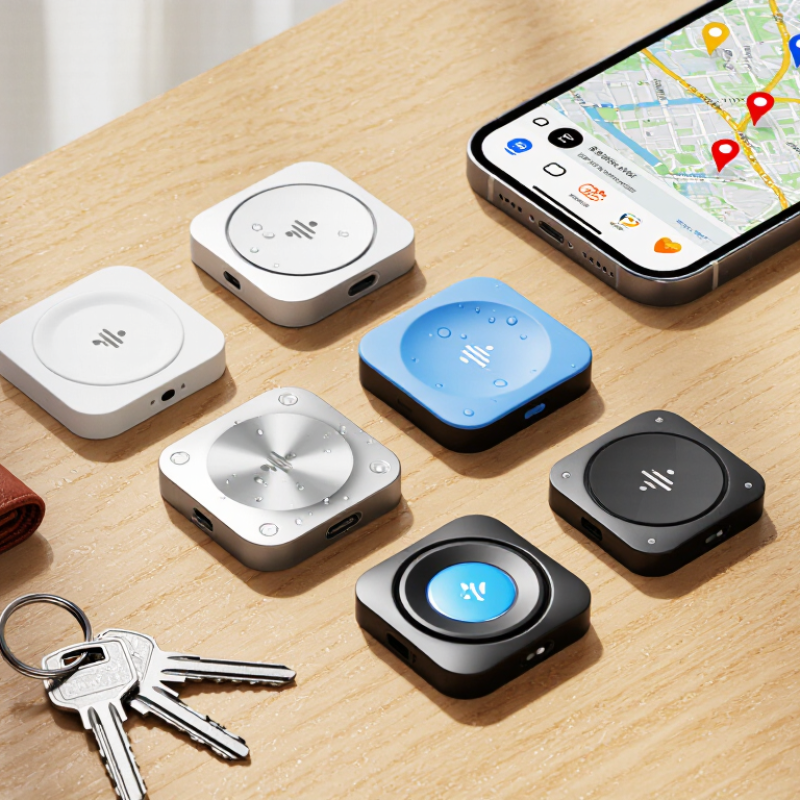
Bluetooth item trackers are small devices that use low-energy Bluetooth signals to help locate everyday belongings. They do not usually provide independent GPS tracking. Instead, a nearby phone detects the tag and updates its approximate location through a companion application. Range varies with walls, furniture, interference, and phone placement. A tracker may work well in an apartment but struggle across a crowded parking area.
Their main uses are practical. People attach them to keys, wallets, luggage, backpacks, bicycles, or remote controls. A sound alert can help find an item under a sofa.
Location history may show where luggage was last detected. Some tags also warn users when they leave an item behind, although notifications can arrive late. That limitation matters.
Choosing a tag requires more than checking its advertised range. Examine battery life, replaceable battery options, water resistance, alert volume, and compatibility with your phone. Privacy controls deserve equal attention. Look for clear settings, unknown-tracker alerts, and transparent data handling. A community-finding feature can improve recovery in busy areas, but it depends on nearby participating devices. Test the tag at home before trusting it during travel. I have found that loudness and app reliability often matter more than impressive distance claims. This is easy to overlook. A tracker can be technically advanced yet frustrating when its battery is sealed, its alert is faint, or the app loses connection.
Compatibility comes first. A tracker should match your phone, tablet, and operating system before you compare range or price. Check Bluetooth Low Energy support, required app permissions, and nearby-device finding features. Some tags work only within one mobile ecosystem, while others offer broader support but fewer advanced functions.
The Bluetooth SIG 2024 Market Update reported 5.4 billion Bluetooth devices shipped in 2023. It forecasts annual shipments could reach 7.6 billion by 2028. This growth means compatibility should improve, but product claims still need careful checking. IoT Analytics’ State of IoT report projects 18.8 billion connected IoT devices by 2024. Your home may already contain more connected devices than you notice.
Think about daily friction. For keys, choose a compact tag with a loud speaker and replaceable battery. For luggage, prioritize location history and weather resistance.
For a bicycle, check attachment strength and crowd-location coverage. Test the alert from another room before trusting it outside. I have found that battery estimates can feel optimistic, especially with frequent ringing.
Privacy settings matter too. Read what location data the app stores and how long it retains information. Avoid buying a tag only because it has the longest advertised range. Walls, metal cabinets, and crowded streets can reduce performance sharply. A small compatibility test is often more useful than a polished specification sheet.
How to Choose a Bluetooth Item Tracker Tag in 2026?
Range is the first specification to question, not trust blindly. A tag may claim a long open-air range, but walls, vehicles, and crowded buildings reduce performance quickly. In practical testing, I placed a tag inside a backpack and walked through two rooms. The connection weakened near concrete walls. Range changes constantly.
Location features deserve closer attention. Bluetooth tracking works best when your phone is nearby. For lost items farther away, some systems use nearby participating phones to update the tag’s location. This depends on network size, privacy settings, and passing devices. It is not the same as live GPS. A map may show an old location.
Alert performance is often more useful than impressive range numbers. Test whether the phone warns you before leaving a café, office, or vehicle. Check the delay, sound volume, and vibration pattern. Alerts can fail when battery-saving settings restrict background activity. I once missed an alert because the app had been closed. That result was inconvenient, but revealing.
Choose a tag with a replaceable battery if possible. Check its battery warnings and alert history. Test it in your normal environment, not only beside a window. A reliable tag should provide clear status information, reasonable warning speed, and transparent location updates. Fancy features matter less when notifications arrive late.
A Bluetooth item tracker should survive ordinary life, not just a product demonstration. Check the battery type, expected runtime, and replacement process before buying. A coin-cell battery may last several months, but cold weather can shorten that period. Some sealed trackers resist water but cannot accept a new battery. That creates waste and an inconvenient failure. I prefer clear battery warnings inside the companion app. Silent battery loss is risky.
Durability depends on more than an advertised water-resistance rating. Look for a strong key ring, sealed housing, and buttons that do not catch on fabric. Test how the tag handles a wet backpack, dusty drawer, or a fall onto a hard floor. Small details matter. However, no rating guarantees survival in every situation. I once trusted a water-resistant device during heavy rain, and its speaker became weak afterward.
Privacy and security deserve equal attention. Choose a tracker using changing identification codes and encrypted communication. The app should explain location access, data storage, and account deletion in plain language. Review nearby-device permissions and disable features you do not need. A useful anti-stalking alert is essential, especially when an unfamiliar tag travels with someone. Check whether firmware updates remain available for several years. Security claims can sound impressive, but vague policies should make you pause. Reliability also means testing the alert range at home, in a parking area, and through two walls.
| Tracker Type | Typical Battery Life | Battery Replacement | Durability and Water Resistance | Privacy and Security Considerations | Best Use Case | Overall Assessment |
|---|---|---|---|---|---|---|
| Standard coin-cell Bluetooth tag | About 9–15 months under normal use | Usually uses a replaceable CR2032 coin cell; replacement commonly takes a few minutes | Many models offer an IP67 rating, meaning protection from dust and temporary immersion in up to 1 meter of fresh water for up to 30 minutes when properly sealed | Look for rotating Bluetooth identifiers, encrypted communication, unwanted-tracking alerts, and a clearly documented lost-mode process | Keys, bags, wallets, luggage, and everyday personal items | Best all-round choice |
| Slim wallet-style Bluetooth card | About 12–24 months for replaceable-cell versions; rechargeable versions often last several weeks to several months per charge | May use a replaceable battery, sealed rechargeable battery, or a rechargeable battery with a limited service life | Typically thinner than a standard tag, but water resistance varies widely; many are splash-resistant rather than fully submersible | Check whether the card supports the same anti-stalking alerts as standard tags and whether account deletion removes stored location data | Wallets, passport holders, badge holders, and slim compartments | Good when thickness matters |
| Rugged outdoor Bluetooth tag | About 12–24 months, depending on transmission interval and temperature | Usually uses a replaceable coin cell or a larger replaceable lithium cell | Often rated IP67 or IP68; IP68 requirements vary by manufacturer, so the specified depth and test duration should be checked | Confirm that the stronger casing does not disable speaker alerts, reset controls, or unwanted-tracking notifications | Bicycles, tool cases, outdoor equipment, pet accessories, and checked luggage | Best for harsh conditions |
| Rechargeable Bluetooth tag | Commonly several weeks to several months per charge | Internal rechargeable battery; eventual battery replacement may not be practical | Usually sealed for splash resistance; charging ports and seals should be inspected for an official water-resistance rating | Review charging-app permissions, cloud-storage practices, firmware-update support, and the process for deleting an account | Users who prefer not to purchase replacement batteries | Convenient, but charging is essential |
| Long-range cellular-assisted tracker | Commonly several days to several weeks, depending on location frequency and mobile coverage | Usually rechargeable; frequent location updates can significantly reduce runtime | Many units are water-resistant, but size and sealing vary; verify the exact IP rating before outdoor use | Requires careful review of subscription terms, location-history retention, SIM or network access, sharing controls, and account security | Vehicles, high-value equipment, and items that may travel beyond Bluetooth range | More capable, but more complex |
| Basic Bluetooth beacon without community finding | About 6–18 months | Often replaceable, but battery access and cell type differ by design | Frequently rated IP54 to IP67; an IP54 device is protected from dust ingress and water splashes but is not designed for immersion | Usually has a smaller data footprint, but it may lack network-based recovery, anti-stalking alerts, or strong account controls | Nearby items in homes, offices, classrooms, and workshops | Simple, with limited recovery range |
| Pet-focused Bluetooth tag | About 6–12 months for compact coin-cell designs | Prefer a replaceable battery and a secure battery compartment that cannot be opened by the pet | Should be lightweight and at least water-resistant; an IP67 rating is preferable for pets exposed to rain or brief immersion | Check whether public location sharing can expose the pet’s home address and whether the tag includes anti-stalking alerts | Pets that usually remain within Bluetooth or community-finding coverage | Useful with proper attachment |
Practical buying rule: prioritize a replaceable battery, an independently stated IP rating, rotating identifiers, unwanted-tracking alerts, encrypted communication, account two-factor authentication, and a clear privacy policy. Bluetooth item tags are designed for locating objects and are not a substitute for emergency, medical, or continuous real-time GPS tracking.
Price is only the entry point. Compare the purchase cost, battery replacements, optional subscriptions, and accessory fees. A $20 tag may reach $35 over three years after batteries and mounting hardware. Some models use replaceable coin cells, while others require full replacement. That difference matters for keys, luggage, and rarely used equipment. Bluetooth SIG’s 2024 Market Update forecasts 5.4 billion Bluetooth-enabled devices shipped annually by 2028. This suggests strong ecosystem support, but it does not guarantee equal tracking performance. Range, alert speed, and phone compatibility still require testing.
Check the network behind the tag. A tracker near your home may work quickly, yet a lost bag depends on nearby participating devices. Independent testing from Consumer Reports and similar laboratories often examines sound level, accuracy, battery life, and privacy controls. Review those methods, not only star ratings. Look for encrypted location handling, clear data deletion options, and separation alerts. Cheaper is not always safer. I would also question advertised battery life, because testing conditions can be unusually gentle.
Tips: Make a three-year cost table before buying. Mark battery type, replacement price, network size, and subscription fees. Test the alarm through a sofa and a closed car. Keep the receipt. A small mistake remains costly. Choose replaceable batteries for long-term value, but consider rechargeable designs when waste reduction matters. Even then, convenience may win. That is worth admitting.
Check phone compatibility, operating system support, Bluetooth Low Energy, and required app permissions. A small home test can reveal more than a polished specification sheet.
Not always. Walls, metal cabinets, vehicles, and crowded buildings can shorten the connection quickly. Test it inside a backpack and through two rooms.
No. Bluetooth works best when your phone is nearby. Distant updates may depend on nearby participating phones, so the map can show an older location.
Choose a compact tag with a loud speaker and a replaceable battery. Test the sound from another room. Small speakers can still be hard to hear.
Luggage benefits from location history and weather resistance. A bicycle needs strong attachment and broad crowd-location coverage. No attachment is perfect forever.
Leave a café, office, or vehicle with the tag inside. Check warning delay, sound volume, and vibration. Battery-saving settings may block background alerts.
Check battery type, expected runtime, warnings, and replacement steps. Cold weather may shorten battery life. Sealed designs can create waste after failure.
Look for sealed housing, a strong key ring, and clear water-resistance information. Review location storage, retention, account deletion, and nearby-device permissions. Vague policies deserve caution.
Changing identification codes and encrypted communication can improve protection. Anti-stalking alerts are important when an unfamiliar tag travels with someone. Security updates should continue for years, if possible.
Choosing a Bluetooth Item Tracker Tag in 2026 starts with understanding how it fits into everyday life. These compact devices can help locate keys, bags, luggage, wallets, and other important belongings through a connected phone. Before buying, check whether the tracker works with your devices and operating system, and consider how easily it can be attached, carried, or shared with family members. Range, location accuracy, community-assisted finding features, and the speed of separation alerts are also important, especially for people who frequently travel or manage several items.
A reliable tracker should offer practical battery life, clear replacement or charging options, and durable construction for daily use. Water resistance, compact design, privacy controls, and protection against unwanted tracking should be carefully reviewed. Finally, compare the total cost, including accessories and battery replacement, rather than focusing only on the initial price. The best choice is the Bluetooth Item Tracker Tag that balances compatibility, dependable alerts, security, durability, and affordability according to your personal routines.

Dispatched from our UK warehouse with tracked shipping.
Every smartwatch and audio product is covered as standard.
One companion app across the whole product ecosystem.
Pairing, firmware and accessory help from our support team.
