Choosing a Sleep Tracking Smartwatch means finding one you can comfortably wear night after night. A watch may promise sleep stages, overnight heart-rate readings, breathing trends, and a morning readiness score. Yet useful data depends on fit, battery life, and whether the companion app explains results clearly. A bulky case can press against your wrist beneath the sheets. A bright screen or frequent charging can also make a promising tracker inconvenient. Small details matter. Look for clear explanations, not just colorful charts.
When comparing models, look beyond feature lists. Check phone compatibility, battery life with overnight tracking enabled, and whether the app offers understandable summaries. Consider adjustable bands, water resistance, data controls, and any subscription cost. Sensor readings are estimates, not a clinical diagnosis, and sleep-stage labels should not be treated as medical facts. If persistent sleep problems concern you, discuss them with a qualified health professional rather than relying on a wearable alone. No watch knows everything. Even a careful tracker can miss a restless night or record an odd result; that uncertainty deserves attention. This guide explores practical trade-offs, helping you choose a Sleep Tracking Smartwatch that fits your routine, budget, and comfort—not just the most impressive marketing claims.
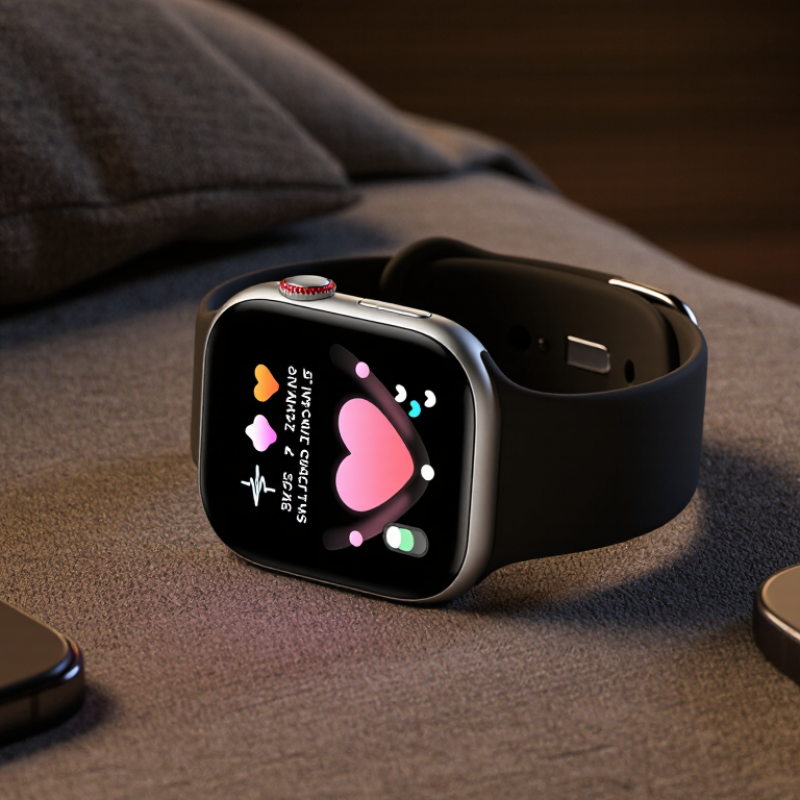
Before comparing features, decide what you want sleep data to change. Are you aiming for a steadier bedtime, fewer short nights, or a clearer view of how late meals affect rest? Pick one or two goals you can act on. For example, track bedtime and wake time for two weeks, then check whether your schedule shifts on workdays.
Think about which details will actually help: total sleep time, regularity, or overnight movement. If you wake tired despite apparently adequate sleep, a watch’s estimates cannot explain the cause.
The AASM’s 2018 position statement cautions that consumer sleep technology should not replace clinical assessment. Keep that limitation in mind. A simple paper note about bedtime, caffeine, and morning energy may reveal patterns a score misses.
I still find it tempting to check every chart; that habit can make sleep feel like homework. Choose a tracker only if its measurements support a useful routine, and review trends rather than judging each night.
Choose metrics that answer a real question, not simply fill a dashboard. If you want to check whether you sleep enough, track total sleep time and compare it with your schedule. The American Academy of Sleep Medicine’s 2015 consensus recommends at least seven hours nightly for adults aged 18–60. CDC researchers found that 35% of U.S. adults reported sleeping under seven hours in 2014. That figure makes duration a practical place to start, though one short night rarely tells the whole story.
For a steadier picture, look at bedtime and wake-time consistency, nighttime awakenings, and sleep efficiency—the share of time in bed spent asleep. A weekly pattern is often more useful than a single score. Trends matter more. Sleep-stage estimates can be interesting, but consumer watches infer them from movement and body signals; they are not direct measurements. Treat them as clues, not clinical results. I’d avoid changing a healthy routine because one night’s “deep sleep” number looks low.
Choose extra metrics only when they match your concern. Overnight heart rate or breathing trends may add context, while repeated changes are worth discussing with a qualified clinician. The American Academy of Sleep Medicine cautions that consumer sleep technology should not replace medical evaluation. Keep the dashboard simple. Too many numbers can make sleep feel like a test, and that can be counterproductive.
| Sleep Metric | What It Shows | Why You Might Monitor It | What to Check in a Watch | Important Limitation |
|---|---|---|---|---|
| Total sleep time | Estimated time asleep during the main sleep period. | Helps you see whether your sleep duration is generally consistent with your needs and routine. | Look for nightly totals, a clear weekly or monthly history, and an option to correct sleep and wake times. | Wearable estimates can differ from actual sleep time; use trends rather than treating one night as definitive. |
| Sleep and wake schedule | Bedtime, wake time, and the timing of your sleep period. | Useful for noticing irregular schedules and checking whether your sleep timing is becoming more consistent. | Choose a watch that displays bedtime and wake-time trends and allows you to set a sleep schedule. | Time in bed is not the same as time asleep, and schedule tracking alone does not measure sleep quality. |
| Sleep stages | Estimated periods of light, deep, and REM sleep. | Can offer a broad picture of how your sleep pattern changes from night to night. | Check that stage estimates are presented as approximate and are easy to review over time. | Wrist-based stage estimates are not equivalent to a clinical sleep study and may be inaccurate for an individual night. |
| Awakenings and sleep interruptions | Possible periods of wakefulness or movement during the night. | May help you identify recurring disruptions, such as a noisy environment or an inconsistent bedtime routine. | Look for a timeline or nightly summary, plus the ability to compare patterns across multiple nights. | Movement can be mistaken for waking, and brief awakenings may not be detected reliably. |
| Overnight heart rate | Heart-rate readings collected while you are asleep. | Useful for observing personal trends and changes alongside sleep, activity, or routine. | Check how often readings are collected, how they are displayed, and whether the watch provides a history. | Readings can be affected by fit, movement, skin contact, and other factors; they are not a diagnosis. |
| Heart rate variability (HRV) | Variation in the time between successive heartbeats, when the device supports overnight measurements. | Some people use long-term personal trends as one part of understanding changes in recovery or routine. | Look for consistent overnight measurement and trend views rather than relying on isolated readings. | HRV varies between people and can change for many reasons; it should not be interpreted as a standalone health assessment. |
| Breathing rate | An estimate of breaths per minute during sleep, if supported by the device. | Can help you review personal overnight trends over time. | Confirm that the feature works during sleep and that the app explains how readings are summarized. | It is an estimate, not a diagnostic measurement; unusual or concerning symptoms warrant professional advice. |
| Blood oxygen (SpO₂) | An estimate of the percentage of oxygen in the blood, on devices with an optical oxygen sensor. | May provide additional overnight readings for people who specifically want this type of trend information. | Check whether overnight measurements are available, how frequently they are taken, and whether the feature is suitable for your intended use. | Consumer wrist readings can be affected by movement, fit, circulation, and other factors; they do not diagnose sleep-related conditions. |
| Skin-temperature variation | Changes in skin temperature at the wrist compared with the wearer’s own baseline, where supported. | Can add context to personal overnight trends when interpreted alongside other measurements. | Check that the watch explains whether it reports a relative change or an absolute temperature. | Wrist skin temperature is not the same as core body temperature and can be influenced by room conditions and device fit. |
| Sleep consistency summary | A combined view of sleep duration, timing, or other sleep-related trends over several nights. | Helpful if you want an easy-to-read overview rather than reviewing many individual measurements. | Choose clear explanations, customizable date ranges, and access to the underlying measurements behind any score. | Scores are calculated differently across devices; prioritize the underlying data and your own trends over comparisons between products. |
Choosing tip: Start with the metrics you will actually use—often sleep duration and schedule consistency—then consider additional measurements if they suit your goals. Smartwatch sleep data is an estimate and is not a substitute for medical evaluation.
A sleep-tracking smartwatch estimates sleep from movement, heart-rate patterns, and sometimes skin temperature or blood oxygen readings. More sensors do not automatically mean better results. A device with a comfortable fit and steady overnight heart-rate readings may be more useful than one with a longer feature list. Check whether its sensors work reliably on your wrist, especially if you move often or have tattoos where the watch sits.
Accuracy is difficult to judge because a watch does not directly measure brain activity like a sleep study. It may mistake quiet wakefulness for light sleep, or miss a brief awakening. Look for independent testing that compares the device with established sleep-measurement methods, and treat exact sleep-stage percentages with caution. Consistency matters. If the watch repeatedly shows a later bedtime after late coffee, that pattern may be more meaningful than a single “deep sleep” score. Still, the reading can be wrong.
Useful data should help you notice habits, not make you anxious about every night. Review trends across several weeks: bedtime, wake time, overnight heart rate, and how rested you feel in the morning. A graph showing shorter sleep after evening screen time can prompt a practical experiment, such as charging your phone outside the bedroom. Keep a simple note beside the app. Your own account of waking refreshed—or not—adds context the sensors cannot capture. Sleep scores are imperfect. That is worth remembering.
A sleep-tracking watch should feel unobtrusive after the lights go out. Try wearing it for an afternoon before relying on it overnight. A bulky case can press against your wrist when you sleep on your side, while a stiff strap may leave a mark by morning. I still find comfort tricky to judge from a product description alone. Small details matter.
Battery life affects whether the watch records a full night consistently. Check how long it lasts with sleep tracking enabled, not just under light use. If it needs charging every day, choose a regular charging time that will not interrupt your routine. Charging before bed may be easy to forget. Also check whether the watch works with your phone’s operating system and the app you plan to use. Some features, such as syncing sleep data or viewing long-term trends, may depend on app compatibility. Confirm that data transfers reliably before settling into a nightly routine. A watch can collect plenty of numbers, but those numbers are less useful if they are hard to access or interpret. Sleep estimates are not medical diagnoses, and occasional gaps can happen. The fit may take a few nights to get right.
Review Privacy, App Features, and Total Cost
Before buying, check what sleep data the watch collects and where it goes. Read the privacy settings, not just the short product description. Can you delete recordings or export them? Does the app explain how long it keeps data? These details matter when nightly records reveal routines, wake times, and more. Small print can be tedious. Still, it deserves a careful look.
An app should make patterns easy to understand, not bury them in colorful charts. Look for clear sleep schedules, overnight summaries, and simple ways to compare weeks. If you wake at 3 a.m., a useful app might show whether that happened often, without treating one restless night as a diagnosis. Check whether core features work without an account or paid plan. More graphs do not always mean more insight.
Calculate the full cost over a year. Include the watch, any subscription, and possible replacement bands or chargers. A low upfront price can become less appealing when detailed reports require monthly payments. Also consider battery life: charging every evening may interrupt overnight tracking. That trade-off is easy to underestimate. I would compare the features I will actually use against the price, then leave room for doubt; sleep scores can look precise while remaining only estimates.
Pick one or two goals, such as a steadier bedtime or fewer short nights. Track bedtime and wake time for two weeks. Keep it manageable.
The American Academy of Sleep Medicine recommends at least seven hours regularly. Treat this as a useful target, not a perfect score.
Watches estimate sleep using movement and signals like heart rate. They do not measure brain activity like a sleep study. Not perfectly.
Be cautious with one-night scores and exact stage percentages. Look for patterns across several weeks, and compare them with how rested you feel.
Not by itself. A watch cannot identify every cause of tiredness. If the problem continues, consider discussing it with a qualified health professional.
Note bedtime, caffeine, and morning energy. For example, a brief note can show whether late coffee often comes before a later bedtime.
Wear it during the afternoon first. Check whether the case presses against your wrist or the strap leaves a mark by morning.
Check battery life with sleep tracking enabled, phone compatibility, and reliable data syncing. Charging before bed is easy to forget.
Choosing a Sleep Tracking Smartwatch starts with understanding what you want to learn about your sleep and how you plan to use the information. Decide which metrics matter most, such as sleep duration, sleep stages, nighttime movement, or breathing patterns. Then compare the watch’s sensors, tracking consistency, and the clarity of its reports. Useful insights should help you notice patterns over time rather than simply present a large amount of data.
Comfort and practicality are just as important as tracking features. Look for a watch that feels comfortable overnight, offers enough battery life for regular use, and works with your phone and other devices. Before making a choice, review the companion app, data privacy settings, and any ongoing costs. The right option balances useful measurements with reliable insights, everyday convenience, and a comfortable fit.

Dispatched from our UK warehouse with tracked shipping.
Every smartwatch and audio product is covered as standard.
One companion app across the whole product ecosystem.
Pairing, firmware and accessory help from our support team.
