Choosing Wireless Audio Earphones is not just a matter of picking the newest model or the biggest driver. Global buyers must weigh comfort, connection stability, battery life, microphone performance, and support in their own markets. A pair that sounds impressive in a quiet showroom may disappoint on a crowded train. Small details matter: the seal of a silicone tip, a charging case that fits a jacket pocket, or a call that stays clear beside traffic.
Mastering engineer and audio educator Bob Katz offers a useful reminder: “The ear is the final judge.” Use that idea alongside practical checks, not instead of them. Listen to familiar tracks at moderate volume. Try different ear tips, test calls in a noisy place, and check whether the controls are easy to use without looking. Compare the manufacturer’s battery claims with independent testing when available. Those numbers can vary with volume, codec, and noise cancellation.
This guide presents ten buying tips for international shoppers, from Bluetooth compatibility and codec support to warranty terms and regional service. Product specifications are useful, but they do not tell the whole story. Fit is personal. Some buyers may also care more about reliable calls than deep bass, and that is perfectly reasonable. A checklist can narrow the field; it cannot choose for your ears. Even careful research leaves room for a mismatch, so check return options before ordering.
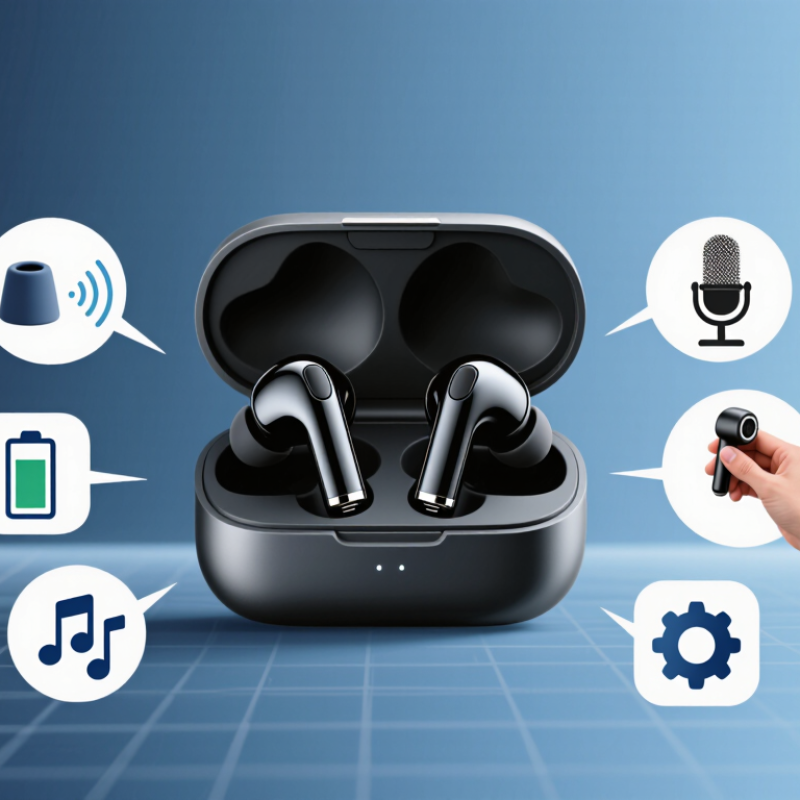
Think about where and how you listen before comparing wireless earphones. A commuter may need a secure fit and useful noise reduction, while someone working at a desk may care more about clear calls. For exercise, check the ear tips and water-resistance rating, then consider how often you can recharge. Fit comes first. Even strong audio can feel tiring if the earphones press or slip.
True wireless earbuds keep each earpiece separate, making them compact and easy to carry. Neckband styles connect the earpieces with a flexible band, which can be harder to lose during a walk. Open-ear designs leave the ear canal uncovered; they can help you hear nearby sounds, though bass may seem lighter. Small details matter. Try to match the design to your routine, not just its feature list.
For video calls or gaming, check whether the stated wireless connection supports low-latency use; performance can vary by device. If you take frequent calls, look for microphone details and test speech in a room with ordinary background noise. Battery estimates are useful, but volume and connection conditions affect real use. A specification sheet cannot predict comfort. I still find that easy to underestimate, especially when a sleek design looks convincing in a photo.
Sound quality is easiest to judge with familiar music, not a short showroom demo. Listen for clear vocals, steady bass, and harsh treble at both low and moderate volume. A bright sound can seem impressive at first, then become tiring during a long commute. Try the earphones in a quiet room and near ordinary street noise. Fit matters too: a loose seal can make bass sound thin, even when the driver is capable. No single listening test tells the whole story.
Battery figures need context. Check whether the quoted time includes the charging case, and compare earbud runtime separately. High volume, frequent calls, and cold conditions can reduce practical playback time. Leave a margin for long travel days. Small charging cases are convenient, but their capacity may be limited. Easy to overlook.
For connectivity, confirm support for the devices and operating systems your customers commonly use. Test pairing, reconnection, call stability, and audio delay with a phone and laptop if both are relevant. Walls and crowded wireless environments can affect range, so a printed distance is not a guarantee. Controls deserve hands-on checks: can users adjust volume or answer a call without removing an earbud? Touch panels may trigger accidentally; physical buttons may feel awkward. Before a large order, test sample units across these details and record results. The comparison can still miss something. That is worth admitting.
Fit affects comfort, stability, and sound, so check more than the earphone’s shape in a product photo. Compare the included tip sizes and look for a secure seal without pressure or soreness. If possible, wear a sample for at least ten minutes and move your head naturally. A loose fit may weaken bass or cause one earphone to slip during a walk.
Tip: Test both ears; they may need different tip sizes.
Durability depends on daily use, not just sturdy-looking materials. Check the stated water-resistance rating and what conditions it covers; sweat protection does not automatically mean safe submersion. Inspect the charging case hinge, port, and earphone seams for signs of weak construction. Keep in mind that ratings and lab tests cannot predict every accident.
Tip: Think about your routine—commuting, workouts, or desk use—and choose protection accordingly.
Compatibility can be easy to overlook. Confirm that the earphones support your device’s Bluetooth version and the features you need, such as call controls or multipoint pairing. Some functions may work differently across operating systems, even when basic audio connects. Read the setup instructions and check whether your device can use the preferred audio codec. I would not assume every advertised feature works equally well on every phone.
Tip: Test pairing, microphone clarity, and reconnecting before the return period ends.
For global buyers, safety claims deserve more than a logo on the box. Check whether the product documentation names a recognized standard, such as IEC 62368-1, and whether the test report matches the exact model. A certificate for a similar-looking earphone is not enough. One easy-to-miss detail is whether the charging case and cable are covered by the same documentation.
Listening limits matter, too. WHO’s 2021 World Report on Hearing estimates that 1.5 billion people live with hearing loss, with nearly 2.5 billion projected by 2050.
The WHO-ITU safe-listening standard recommends a weekly sound allowance of 80 dB for 40 hours for adults, and 75 dB for children. Look for clear volume controls and safety guidance, not just bold claims about powerful sound.
Tips: Request the written warranty before paying. Check what it excludes, who pays return shipping, and whether support is available in your country. Verify the seller’s business address, recent transaction history, and return process; polished product photos prove little. Keep the paperwork. A long warranty can still be difficult to use, so read the conditions carefully.
For global buyers, the listed price is only part of the cost. Compare the unit price with sample fees, minimum order quantities, payment charges, and estimated import taxes. Ask for a written quote that states the currency and how long the price remains valid. Exchange rates can shift before an order is confirmed. Keep records.
Shipping estimates should include handling time, transit time, and the delivery method. Request tracking details and check whether duties are prepaid or collected on arrival. For a small test order, compare the quoted delivery date with the carrier’s actual service for your destination. Delays happen, and a seller’s estimate is not a guarantee. Packaging matters too: ask how the charging case and earphones are protected against moisture and impact.
Tips: Confirm the return address, warranty period, and who pays return shipping before you buy. Ask whether support covers the charging case, cables, and individual earbuds, not just the set. Save the order page, invoice, and support messages. A low price may still make sense, but only if the service terms are clear. Some details are easy to overlook, even after careful comparison.
| No. | Buying Dimension | What to Check | Practical Guidance | Pricing, Shipping, or Support Consideration |
|---|---|---|---|---|
| 1 | Set a realistic budget | Compare the complete product package, including charging case, cable, ear tips, and any required accessories. | Entry-level wireless earphones often prioritize basic playback and calls; higher-priced models may add features such as active noise cancellation, multipoint connection, or improved app support. | Compare the total delivered cost, including shipping, taxes, import duties, and any payment or handling fees—not just the listed product price. |
| 2 | Check audio and Bluetooth specifications | Review the supported Bluetooth version, audio codecs, microphone details, and compatibility with your devices. | A codec only provides a benefit when both the earphones and the playback device support it. Bluetooth version alone does not guarantee better sound or range. | Ask the seller to confirm the exact model specification in writing, especially when product listings use broad or inconsistent descriptions. |
| 3 | Assess battery-life claims | Distinguish earbud playback time from the combined playback time with the charging case. | Battery results vary with volume, call use, wireless features, temperature, and battery age. Treat advertised figures as test-condition estimates rather than guaranteed everyday performance. | For bulk or repeat orders, request documented test conditions and clarify how battery defects are handled under the warranty. |
| 4 | Choose the right fit and water resistance | Check whether the design is in-ear, open-fit, or another style, and review any stated IP rating. | An IP rating applies only to the protection conditions specified for that product. It does not automatically mean the earphones are suitable for swimming or exposure to salt water. | Confirm that replacement ear tips or other fit accessories can be purchased and shipped to your country if needed. |
| 5 | Compare seller quotes fairly | Request an itemized quotation showing unit price, order quantity, packaging, payment terms, and any setup or customization charges. | For larger orders, compare quotes at the same quantity and specification. Ask whether the stated price is an estimate or a confirmed offer and how long it remains valid. | Check whether freight is included. Shipping terms can affect who arranges transport, insurance, customs clearance, and delivery to the final address. |
| 6 | Check shipping time and tracking | Ask for the dispatch estimate, transport method, tracking availability, and expected delivery window for your destination. | International transit times depend on the carrier, route, customs processing, holidays, and local delivery conditions; an estimate is not a guaranteed arrival date. | Confirm whether the seller ships to your postcode and what happens if a parcel is delayed, damaged, or marked as undeliverable. |
| 7 | Calculate duties and taxes | Identify which party is responsible for import declarations, customs charges, and local taxes. | Import requirements and charges differ by destination and product classification. Check with your local customs authority or tax adviser before ordering. | Ask whether duties and taxes are prepaid or collected on delivery. A low shipping quote may exclude these costs. |
| 8 | Review warranty coverage | Read the warranty duration, covered faults, exclusions, claim process, and required proof of purchase. | Warranty terms are seller- and product-specific. Confirm whether coverage applies in your country and whether normal wear, accidental damage, or battery capacity loss is excluded. | Ask who pays return shipping and whether a repair, replacement, or refund is offered when a valid claim is approved. |
| 9 | Evaluate after-sales support | Check support hours, response channels, available languages, troubleshooting resources, and spare-part availability. | Keep the order confirmation, serial or batch details, and written support correspondence. These records can help when resolving a claim across borders. | Before purchase, test the support channel with a product or warranty question and confirm whether assistance is available in your time zone. |
| 10 | Check compliance and documentation | Request applicable safety, radio, battery, and transport documentation for the markets where the product will be sold or used. | Requirements vary by country and product configuration. Verify documents with the relevant authority or qualified compliance professional; do not assume one certificate covers every market. | For international orders, confirm that the invoice, product description, battery details, and shipping documents are accurate and consistent. |
Note: Shipping terms, import charges, warranty coverage, and product requirements vary by seller and destination. Confirm all prices, delivery estimates, and support commitments in writing before placing an order.
Look for a secure fit and useful noise reduction. Try them near ordinary street noise. Fit comes first.
Check the ear tips, water-resistance rating, and charging routine. A loose fit can spoil a workout.
True wireless earbuds are compact. Neckband styles are harder to lose on a walk. Open-ear designs let nearby sounds through, but bass may feel lighter.
Listen to familiar music at low and moderate volume. Check clear vocals, steady bass, and harsh treble. A short demo can mislead.
Compare earbud runtime separately from case capacity. High volume, frequent calls, and cold weather may shorten playback. Leave a margin for travel.
Confirm low-latency support and test it with the devices you use. Connection performance can vary. Specifications do not tell the whole story.
Test speech in a room with ordinary background noise. Check whether your voice sounds clear. I still underestimate how much this matters.
Try sample units with a phone and laptop. Check pairing, reconnection, call stability, audio delay, and controls. Touch panels can trigger by accident; buttons may feel awkward.
Choosing Wireless Audio Earphones starts with understanding how and where you plan to listen, since different styles suit commuting, exercise, work, or everyday use. Compare sound quality, battery life, wireless connection stability, and ease of control to find a model that fits your routine. Comfort and a secure fit matter for longer sessions, while durable construction can help earphones withstand regular use. Check that they work with your devices and offer the features you need.
Before buying, review product safety information, warranty coverage, and the seller’s reliability. Consider the full cost, including shipping, delivery times, and any applicable fees, especially when ordering internationally. Clear return terms and accessible after-sales support can make it easier to resolve issues. By weighing these practical factors together rather than focusing on a single feature, buyers can make a more informed choice that suits their listening habits, budget, and location.

Dispatched from our UK warehouse with tracked shipping.
Every smartwatch and audio product is covered as standard.
One companion app across the whole product ecosystem.
Pairing, firmware and accessory help from our support team.
