Precision-engineered hardware platforms available for white-label customized OEM production, private mold integration, and rapid turnkey deployment.
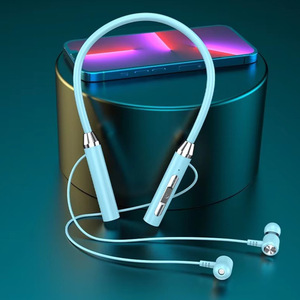
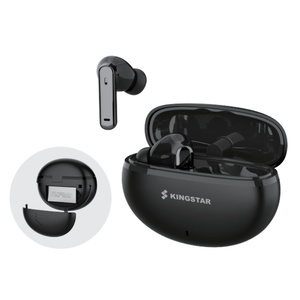
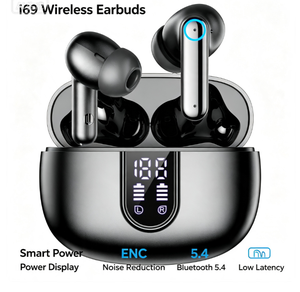
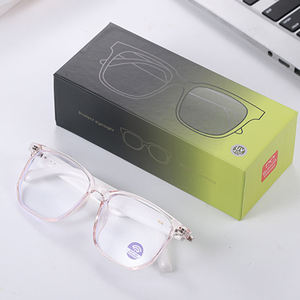
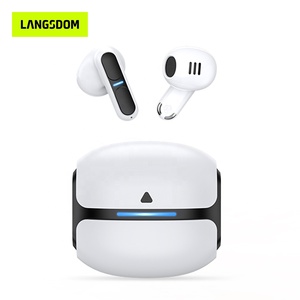
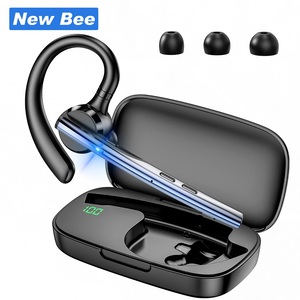
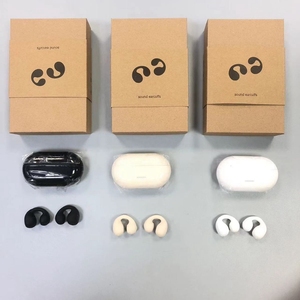
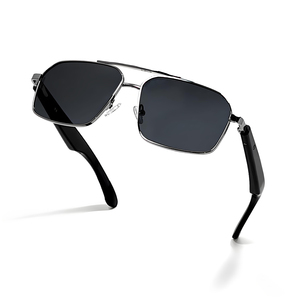
Delivering end-to-end wearable engineering: from custom PCB design and proprietary biometric algorithm tuning to SDK companion app integration and strict ISO-certified cleanroom assembly.
Our proprietary hardware setup operates across 5 distinct wearable watch and band families (ranging from 28mm ultra-sleek profiles to 46mm rugged outdoor cases). Brands can mix and match case tooling, magnetic charger pinouts, and quick-release strap sizes while utilizing a single standard SDK companion app.
Every custom OEM fitness band line undergoes rigorous environmental and physical testing. From multi-axis vibration testing and drop resistance to 50-meter hydrostatic pressure testing for open-water swim tracking, we enforce precise IP68/5ATM standards across all production batches.
Equipped with low-power Nordic and Realtek Bluetooth Low Energy (BLE 5.3 / 5.4 / 6.0) microcontrollers, our wearable devices feature stable dual-platform pairing for iOS and Android. Custom white-label companion apps include cloud-backed Over-The-Air (OTA) firmware upgrade paths.
An authoritative technical analysis of sensor innovation, micro-display advancements, and AI-driven health analytics defining smart band OEM manufacturing.
The global wearable technology ecosystem is undergoing a fundamental structural transition. Brand owners and enterprise procurement directors sourcing from custom OEM fitness band factories must evaluate emerging engineering trends beyond basic step-counting. Modern fitness tracker manufacturing demands deep integration between multi-wavelength Photoplethysmography (PPG) sensor arrays, high-density AMOLED micro-displays, and on-device Edge AI algorithms.
Legacy fitness trackers relied on single-green-LED optical sensors, yielding high error margins during high-intensity interval training (HIIT) or under low peripheral blood perfusion. Next-generation factory manufacturing integrates multi-spectral PPG optical arrays combining green, red, and infrared light-emitting diodes alongside multi-channel photodiode receivers.
Display power consumption remains the primary bottleneck for continuous biometric tracking. Factory engineering teams are shifting away from traditional reflective TFT displays toward custom high-resolution AMOLED and Micro-LED displays paired with ambient light sensors and adaptive frame-rate drivers.
| Technology Parameter | Standard TFT LCD Smart Band | OEM Custom AMOLED Smart Band | Next-Gen Micro-LED Wearable |
|---|---|---|---|
| Peak Luminance (Nits) | 350 - 450 nits | 600 - 1,000 nits (Sunlight Legible) | 1,500+ nits (Extreme Outdoor Visibility) |
| Display Power Draw | High (Continuous Backlight) | Low (Self-emitting pixel control) | Ultra-Low (50% efficiency gain vs AMOLED) |
| Color Contrast Ratio | 1,000 : 1 | 100,000 : 1 (True Blacks) | 1,000,000 : 1 |
| Always-On Display (AOD) | Limited (Drains battery rapid) | Optimized (Low-power sub-pixel drive) | Hardware Native (Minimal drain) |
Offloading raw sensor signal processing to cloud infrastructure introduces latency, data security vulnerabilities, and battery depletion via continuous BLE transmission. Leading custom OEM fitness band factories are embedding dedicated neural network processing units (NPUs) into 32-bit ARM Cortex-M microcontrollers. This empowers the fitness band to perform complex pattern recognition directly on the wrist, including continuous arrhythmia detection, precise stroke-type categorization for swimming, and automatic activity recognition.
Strategic guidance for enterprise buyers, brand managers, and hardware procurement teams evaluating contract manufacturers and factory partners.
While open-tooling models reduce initial capital expenditure (NRE charges), they leave brands exposed to product homogenization. Investing in private mold tooling protects IP, allows specialized water-sealing channel engineering (IP68/5ATM), and builds distinctive brand identity across distribution channels.
Hardware without robust software integration creates high warranty and customer support overhead. Sourcing partners must ensure the factory provides fully documented Bluetooth API specifications, white-label mobile app source code, dynamic watch-face SDKs, and GDPR/CCPA-compliant cloud database connectors.
To prevent unexpected component obsolescence (EOL), procurement teams must audit the factory's Bill of Materials (BOM). Ensure primary microcontrollers (e.g., Nordic NRF52840, Realtek RTL8762D) and optical sensors (e.g., PixArt, AMS) have minimum 5-year production availability roadmaps.
Detailed technical and commercial answers addressing common OEM/ODM buyer inquiries, regulatory compliance, quality control, and custom manufacturing workflows.
Our baseline OEM production MOQ for standard customized colorways, custom laser-etched branding, and customized packaging starts at 1,000 units per reference. For full ODM project development involving custom plastic/metal injection private molds, custom PCB layout design, and bespoke sensor configurations, the typical MOQ is 3,000 to 5,000 units depending on component sourcing requirements.
Yes. All of our wearable hardware platforms utilize standard Bluetooth Low Energy (BLE 5.0 / 5.3 / 5.4) protocols that seamlessly pair with both iOS (version 12.0+) and Android (version 7.0+) smartphones. We provide fully developed companion mobile applications that brand partners can white-label with custom UI branding, color palettes, and localized language suites.
Our OEM manufacturing facilities operate under strict ISO 9001 (Quality Management System) and ISO 13485 (Medical Devices Quality Management) certifications. Finished fitness bands and smart wearables comply with CE, FCC, RoHS, REACH, and WEEE requirements. Battery cells integrated into our devices carry UN38.3, IEC 62133, and MSDS safety certifications for global air and ocean freight transportation compliance.
Every single casing design undergoes hydrostatic pressure testing during both the NPI (New Product Introduction) engineering phase and routine mass assembly lines. For IP68 and 5ATM swim-ready models (such as our Sea Venture platform), 100% of finished cases undergo automated vacuum decay air-pressure testing followed by continuous water submersion sample checks to ensure strict structural sealing against ingress.
Absolutley. We offer comprehensive software development kit (SDK) customization. Clients can deploy our turnkey white-label iOS/Android app branded with their logos, custom cloud server endpoints, and localized analytics dashboards. Furthermore, our internal graphic team designs customized dynamic watch face libraries and allows clients to upload custom watch face creation tools directly within the app.
We provide a comprehensive 2-year warranty on all wearable hardware platforms, active fitness bands, smart glasses, and true wireless audio products. In addition to hardware warranty coverage, we maintain a inventory of spare quick-release silicone/metal straps, replacement magnetic charging pin cables, and modular battery assemblies to ensure zero downtime for your retail and e-commerce RMA channels.
Existing model samples with custom logo laser engraving or customized packaging mock-ups can be dispatched within 5 to 7 working days. Mass production for standard OEM orders typically takes 25 to 30 days following sample sign-off and component allocation. Custom ODM projects requiring new mold tooling design generally take 45 to 60 days from CAD approval to pilot production run.
Partner with a proven hardware factory specializing in precision OEM/ODM fitness bands, private molds, custom BLE firmware, and turnkey companion apps. Request your custom quotation and product sample kit today.
Dispatched from our UK warehouse with tracked shipping.
Every smartwatch and audio product is covered as standard.
One companion app across the whole product ecosystem.
Pairing, firmware and accessory help from our support team.
