Engineered for high-volume enterprise procurement, mobile device brand integrations, and smart wearable displays. All references built under Class 100 dust-free cleanroom specs.
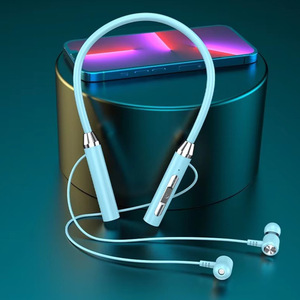
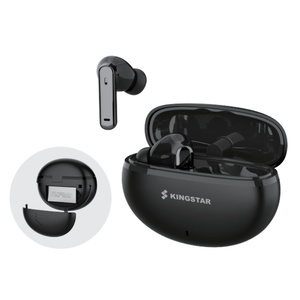
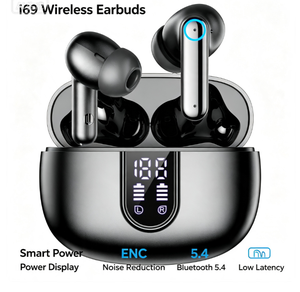
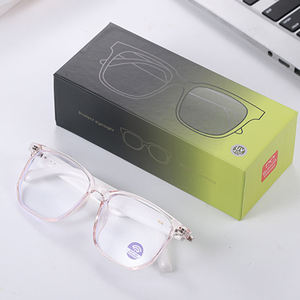
In the rapidly expanding global consumer electronics ecosystem, the request for specialized, high-durability screen protection has transitioned from an aftermarket commodity to an integral component of brand equity. Modern display architectures—ranging from high-refresh OLED smartphone panels and wearable AMOLED smartwatches to specialized automotive micro-displays and AR smart glasses—require protective substrates engineered with atomic-level precision. As a premier custom OEM screen protector manufacturer and dedicated glass fabrication plant, our production facilities bridge raw glass substrate science with industrial-scale manufacturing.
Sourcing executives, brand managers, and procurement directors must navigate a complex supply landscape governed by material yield metrics, chemical tempering bath recipes, optical coating longevity, and dimensional tolerance thresholds. The purpose of this technical whitepaper is to establish actionable benchmarks for evaluating OEM screen protector suppliers, understanding emerging material engineering trends, and mitigating risk across high-volume contract manufacturing cycles.
High-Alumina Silicate vs. Soda-Lime glass matrices tailored for impact dispersal, surface compression layer depth (DoL > 45μm), and edge toughness.
Vacuum-plated oleophobic fluorosilane polymers yielding water contact angles > 115° with endurance testing exceeding 10,000 friction cycles.
Class 100 dust-free lamination environments eliminating particle occlusion down to 0.3 microns during Optically Clear Adhesive (OCA) assembly.
The global display protection sector is undergoing a fundamental structural transition driven by changes in OEM hardware design languages, consumer durability expectations, and stringent environmental compliance regulations (RoHS 3.0, REACH, halogen-free directives). To maintain competitive positioning, procurement teams must align with manufacturing partners who actively invest in next-generation material science.
Traditional soda-lime glass, long favored for low-cost mass production, is quickly being replaced by High-Alumina and Lithium-Aluminosilicate (LAS) formulations. LAS glass matrices allow deeper potassium-sodium ion exchange during chemical tempering baths at 400°C–450°C. The resulting Compressive Stress (CS) layer exceeds 750 MPa (compared to ~300 MPa in standard glass), drastically reducing drop-induced glass propagation and corner micro-fractures.
Modern displays demand uncompromised sunlight legibility and color accuracy. OEM screen protector factories are adopting inline vacuum magnetron sputtering to deposit multi-layer Anti-Reflexive (AR) coatings. By inducing destructive interference across visible wavelengths, reflection index drops from standard 4% to under 0.5%, elevating total light transmittance to 96%+. Simultaneously, Anti-Glare (AG) chemical etching creates controlled micro-texture surfaces that reduce specular glare without degrading display sharpness.
As foldable smartphone displays and curved 3D smart wearables gain market share, rigid flat glass protection is no longer sufficient. Contract manufacturing is branching into Ultra-Thin Glass (UTG) under 100 microns thick that offers real glass tactile feel while tolerating bend radii under 1.5mm. Concurrently, UV-cured liquid hydrogel films provide self-healing properties that automatically absorb micro-scratches within 24 hours while conforming flawlessly to aggressive waterfall edge displays.
Environmental metrics are now heavily weighted in tier-1 supply chain audits. Leading custom OEM screen protector factories are phasing out virgin PET carrier liners in favor of Recycled PET (rPET) or PLA bio-degradable release papers. Furthermore, water-soluble adhesives and non-toxic UV-curable inks for custom branded packaging are becoming mandatory requirements for EU and North American retail distribution channels.
Understanding the internal Standard Operating Procedures (SOP) of an OEM screen protector factory is essential to verifying product authenticity and preventing supply chain failures. High-yield glass manufacturing relies on strict execution across five primary production stages:
Integrated manufacturing capabilities designed to lower total procurement cost, streamline private label engineering, and protect your brand reputation.
Full CAD/CAM tooling customization for new device launches within 48 hours. Support for custom silk-printing, anti-spy privacy angles (28°/30°/45°), anti-blue light tinting, and customized packaging solutions.
Over 15,000 square meters of environmental-controlled, dust-free cleanrooms equipped with automated high-speed lamination and optical sensor inspection systems ensuring >99.2% pristine yield rates.
ISO 9001:2015, ISO 14001, and BSCI certified factory operations. Every shipment is backed by our comprehensive 2-year quality performance guarantee, covering coating durability and adhesive integrity.
Rapid prototyping samples delivered via express courier within 24 to 48 hours. Flexible DDP/FOB/CIF freight terms with global compliance, custom duty handling, and consolidated warehousing options.
Answers to crucial technical, financial, and logistical questions asked by enterprise procurement teams during factory selection and contract audits.
Our standard MOQ for custom OEM orders varies by material complexity. For existing phone models using standard 2.5D High-Alumina glass, MOQ starts at 1,000 pcs per SKU. For custom CNC toolings, specialized 3D hot-bending, or non-standard device shapes (e.g., medical devices, specialized smartwatches), baseline MOQs typically start at 3,000 pcs. We offer sample tooling runs for prototypes upon request.
Every batch undergoes stringent laboratory testing. We utilize a 4-point bending strength tester to verify Compressive Stress (CS > 700 MPa) and Depth of Layer (DoL > 40 μm). Physical impact resistance is verified via a 64g steel ball drop test executed at heights starting at 1.2 meters directly onto glass laminated onto a test display rig. Passing criteria requires 0% cracking across 10 sample drops.
Yes. Ultrasonic under-display fingerprint sensors require strict thickness control and uniform optical adhesive density. We utilize ultra-thin glass substrates (0.15mm to 0.20mm) combined with specialized high-transmittance, ultra-thin 0.1mm AB glue layers to ensure instant response times without creating blind spots or signal attenuation.
Engineering sample lead times for existing CAD files take 24–48 hours. Custom CNC mold building and sampling require 3 to 5 business days. Once samples receive client sign-off, standard mass production lead time for orders up to 100,000 units is 10 to 14 calendar days, managed under strict ISO schedule controls.
Our manufacturing plant operates under ISO 9001:2015 Quality Management Systems and ISO 14001 Environmental Management certification. All finished products comply strictly with EU RoHS 3.0, REACH SVHC, halogen-free, and Proposition 65 regulations. Full material chemical analysis safety datasheets (MSDS) and SGS test reports are provided with every batch certificate.
Absolute turn-key fulfillment is one of our primary core offerings. We supply full packaging engineering services, including FSC-certified rigid paper boxes, blister packs, custom artwork silk-printing, barcode labeling, and integrated cleaning kits (wet/dry alcohol wipes, microfiber cloths, dust remover stickers) ready for immediate retail shelf display.
Connect with our technical engineering team today to receive instant price quotes, request custom factory samples, or schedule an audit of our ISO-certified cleanroom manufacturing plant.
Contact UsDispatched from our UK warehouse with tracked shipping.
Every smartwatch and audio product is covered as standard.
One companion app across the whole product ecosystem.
Pairing, firmware and accessory help from our support team.
