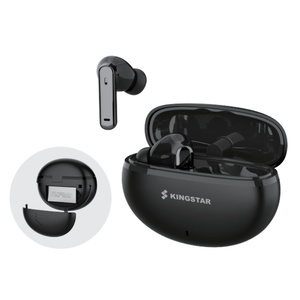
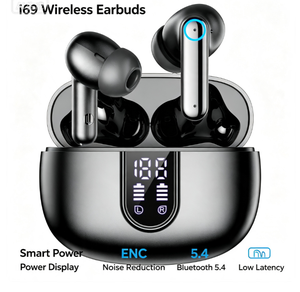
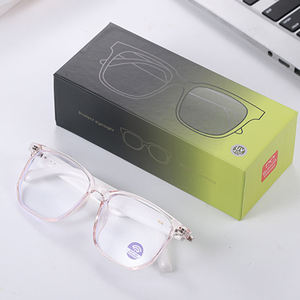
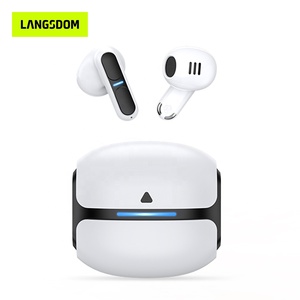
Featured Smart Wearables & Precision TPU Ecosystem
Explore our export-grade, IP68-rated wearables, ergonomic TPU replacement bands, and custom audio hardware engineered under strict ISO9001:2015 quality frameworks.
Engineering Excellence in TPU Watch Strap OEM Manufacturing
As wearable device ecosystems expand beyond simple pulse measurement into medical-grade tracking, active GPS navigation, and immersive smart lifestyle electronics, component suppliers must meet stringent physical and chemical standards. Thermoplastic Polyurethane (TPU) has emerged as the premier polymer matrix for wearable wrist straps, smart fitness bands, and protective audio sleeves. Offering a bridge between flexible rubber and rigid plastics, TPU provides an unmatched balance of tensile strength, elongation at break, skin safety, and resistance to environmental stress cracking.
Our manufacturing complex in China integrates state-of-the-art multi-cavity injection molding machines, automated liquid color dosing, and precision laser texture processing. We work directly with global consumer electronics brands, smartwatch OEMs, and tier-1 accessory distributors to formulate customized TPU resins tailored to exact shore hardness ratings (from 60A ultra-soft to 95A high-rigidity structural bands).
Information Gain Metric: Standard silicone straps suffer from high lint accumulation and low tear propagation resistance. Polyether-based TPU formulations deliver a 300% increase in tear strength while maintaining zero surface tackiness without chemical spray coatings.
Polyether vs. Polyester TPU: Selecting the Right Chemical Base
Navigating global procurement requires a deep understanding of polymer chemistry. Not all TPU materials are created equal. When engineering wristbands designed for constant skin contact, perspiration exposure, and UV radiation, choosing the correct molecular backbone is crucial:
| Performance Characteristic |
Polyether-based TPU |
Polyester-based TPU |
Liquid Silicone Rubber (LSR) |
| Hydrolysis Resistance |
Superior (Long-term water/sweat exposure) |
Moderate (Prone to long-term degradation) |
Excellent |
| Microbial & Fungus Resistance |
Grade 0 (No growth under ASTM G21) |
Grade 1-2 (Requires additive treatments) |
Inert |
| Tear Strength (N/mm) |
85 - 110 N/mm |
95 - 125 N/mm |
35 - 55 N/mm |
| UV & Anti-Yellowing Index |
Delta E < 2.5 (Aliphatic grade) |
Delta E > 4.0 (Aromatic base) |
High color stability |
| Recyclability & Circularity |
100% Thermoplastic Recyclable |
100% Thermoplastic Recyclable |
Thermoset (Difficult recycling) |
For aquatic, outdoor sports, and rugged wearables (such as our Sea Venture and Venture smartwatch accessory lines), we exclusively specify Polyether Aliphatic TPU. This guarantees that watch bands resist color shifts when exposed to sunlight, remain structurally intact after prolonged immersion in chlorinated pools or seawater, and pass ISO 10993 cytotoxicity and skin-sensitization testing.
Future Procurement Trends in Wearable TPU Straps
Strategic insights for brand buyers, product architects, and global supply chain managers preparing for the next 5-year hardware cycle.
1. Bio-Based & Mass-Balance Recyclable TPU
Global regulatory mandates (such as EU REACH, RoHS 3, and ESG corporate disclosures) are driving demand for non-fossil-derived elastomers. Modern procurement focuses on bio-content TPU synthesized from castor oil polyols, yielding up to 60% bio-based carbon content without sacrificing mechanical strength.
2. Co-Molded Conductive & Sensor TPU
The convergence of smartwatches and medical telemetry requires straps to act as conductive paths. Advanced dual-injection tooling allows silver-nanowire or carbon-nanotube doped conductive TPU channels to be molded directly into soft structural bands, enabling seamless dry-ECG electrode integration.
3. Laser Micro-Texturing & Haptics
Moving away from volatile chemical matte sprays, top China exporters utilize 5-axis femtosecond laser etching on mold cavities. This transfers nanoscale textures directly onto TPU strap surfaces, resulting in hydrophobic, velvet-touch finishes that resist oil adhesion natively.
4. Antimicrobial Zinc-Ion Matrixing
Continuous wear creates breeding grounds for bacteria. Modern TPU formulations incorporate inorganic zinc or silver ion matrices uniformly dispersed within the resin pellets during extrusion, providing 99.9% antibacterial efficacy against S. aureus and E. coli under ISO 22196.
5. Quick-Release Magnetic Mechanism Integration
Consumers expect frictionless strap customization. High-volume export manufacturing now centers around over-molded 316L stainless steel lugs and embedded neodymium magnetic connectors, enabling instant strap swaps without compromising IP68 waterproof ratings.
6. Precision Color Matching via Pantone TCX
Achieving batch-to-batch color consistency in elastic polymers is challenging. Utilizing computer-controlled spectrophotometers and automated liquid masterbatch dosing, leading suppliers maintain tight color tolerances within a Delta E of less than 0.8.
Why Partnering with a Specialized China TPU Exporter Matters
China remains the powerhouse of world electronics manufacturing, but securing a reliable B2B supplier requires auditing technical infrastructure, quality assurance protocols, and intellectual property protections. Our production facility bridges international design standards with scalable manufacturing efficiency.
1. Advanced In-House Tooling & Mold Design
Precision TPU molding demands tight thermal management within injection cavities to prevent material shearing and sink marks. Our engineering team utilizes Moldflow® simulation software to optimize gate positioning, runner balancing, and cooling channel layouts. This reduces tooling lead times from the industry average of 35 days down to 18 days for rapid prototyping.
2. Integrated Cross-Category Manufacturing Ecosystem
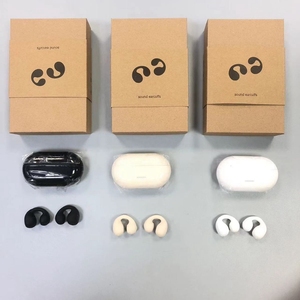
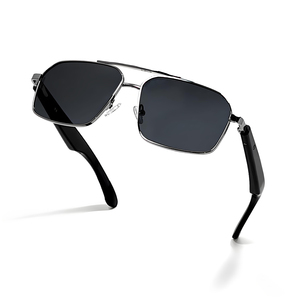
Unlike single-line injection workshops, our production ecosystem spans comprehensive smart wearable hardware. From high-grade TPU replacement bands and rugged smartwatch protective cases to TWS audio housings, ANC earhooks, and smart audio glasses, we supply complete turnkey assemblies. This consolidated manufacturing capability lowers logistics overhead, ensures consistent color-matching across product suites, and simplifies quality auditing.
3. Rigorous Quality Control & Testing Protocols
Every production batch undergoes a battery of mechanical and environmental stress tests prior to export clearance:
- Torsion & Flex Testing: 50,000 continuous cycle twisting test at 180 degrees without micro-fracturing.
- Tensile & Pull Strength: Minimum 15kg force load applied to quick-release pin housings.
- Sweat & Chemical Resistance: 72-hour immersion in synthetic perspiration solution (pH 4.7 and pH 8.8).
- Environmental Chamber Exposure: Thermal shock testing from -30°C to +70°C with 95% relative humidity.
Frequently Asked Questions for B2B Procurement
Technical and commercial clarity for procurement managers, brand owners, and OEM partners.