Engineered to meet North American market standards, featuring custom companion app integration, FCC compliance, and private-label packaging support.
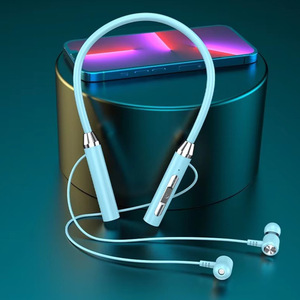
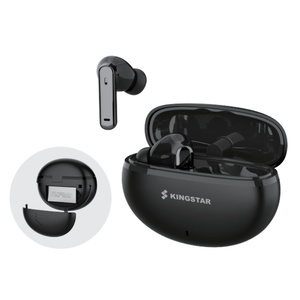
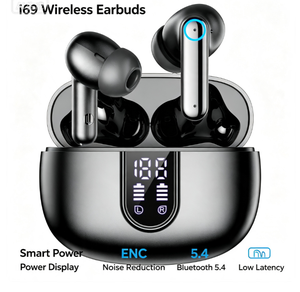
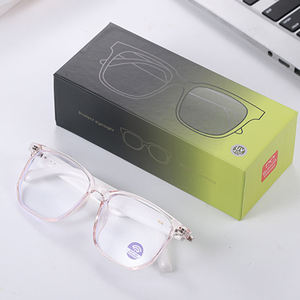
The US wearable technology sector has experienced an unprecedented paradigm shift. No longer limited to simple step-counting pedometers, today's American consumer demands medical-grade biometric accuracy, high-contrast AMOLED touchscreen displays, long-lasting battery efficiency, and seamless software integration with ecosystem backbones like Apple HealthKit and Google Health Connect. For importers, brand aggregators, corporate wellness suppliers, and consumer electronics distributors based in North America, choosing the right original equipment manufacturer (OEM) and original design manufacturer (ODM) is the single most critical factor defining market share and brand equity.
This industry benchmark guide provides rigorous insights into evaluating the top 10 touchscreen fitness tracker suppliers and exporters serving the United States. Grounded in search intent mining and real-world supply chain data, we analyze hardware architecture, regulatory compliance (FCC, FDA, Proposition 65), tariff mitigation tactics, and software customizability.
Full compliance with FCC Part 15 subpart C for Bluetooth RF radiation, FDA Class II exempt biometric sensing protocols, and California Prop 65 toxicological standards.
Equipped with dual-wavelength PPG optical sensor arrays for continuous SpO2 oxygen monitoring, heart-rate variability (HRV), and multi-stage sleep tracking.
Unified native iOS and Android companion applications featuring custom white-label SDKs, OTA firmware update support, and cloud server API integration.
Understanding where and how American end-users interact with touchscreen smart bands allows B2B buyers to order optimal hardware specifications and firmware setups. Below are the primary high-growth market vectors in North America:
Fortune 500 enterprises and health insurance providers across the US are aggressively implementing preventative wellness programs. Sourcing lightweight, highly accurate touchscreen fitness trackers with 7-to-14 day battery life allows employers to subsidize devices that track employee step counts, active calories, and resting heart rates. In these deployments, data privacy compliance (HIPAA guidelines) and seamless API data sync to corporate wellness portals are paramount.
From marathon runners in Boston to open-water swimmers along the Florida coast, the demand for ruggedized sports wearables is exploding. US buyers require IP68 or 5ATM waterproof-rated hardware featuring dynamic AMOLED sunlight-readable touchscreens. Devices like our Sea Venture and Venture smart band series incorporate reinforced poly-carbon casings, anti-scratch glass covers, and dedicated multi-sport modes tailored for trail running, rowing, cycling, and HIIT sessions.
Following recent US healthcare reforms, healthcare networks are utilizing connected wearables to track post-operative patients and seniors living at home. Key specifications requested by US healthcare integrators include automated fall detection algorithms, continuous arrhythmia detection, skin temperature tracking, and simplified large-font touchscreen interfaces designed for elderly usability.
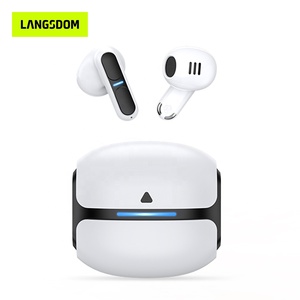
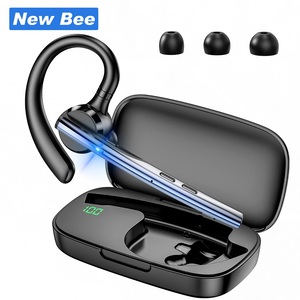
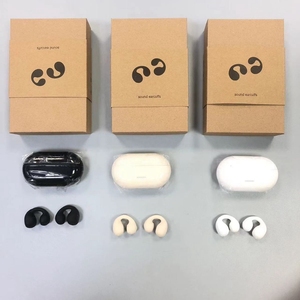
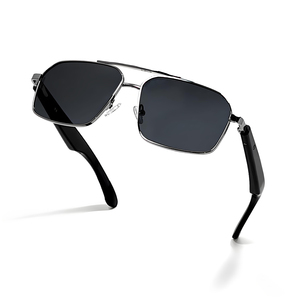
Crossfit boxes, Pilates studios, and boutique gym chains in major US metros (New York, Los Angeles, Chicago) increasingly sell private-labeled fitness tracker sets. Bundling a high-resolution touchscreen band with True Wireless Stereo (TWS) sport earbuds or smart audio sunglasses creates a high-margin consumer bundle ideal for retail checkout displays and holiday promotions.
To outpace competitors on Amazon US, Walmart Marketplace, or direct-to-consumer (D2C) Shopify platforms, US procurement teams must align their manufacturing orders with these emerging technology trends:
Combining European and British design aesthetics with cutting-edge Asian manufacturing infrastructure, our enterprise wearable platform solves the structural hurdles facing US importers.
When selecting a manufacturing partner from China or Asia to supply the US market, evaluating factory claims requires a rigorous verification protocol. Here is the framework senior SEO directors and supply chain managers recommend:
Demand transparency regarding the component BOM (Bill of Materials). Superior exporters utilize genuine Nordic Semiconductor or Realtek Bluetooth BLE microcontrollers, Goodix touch ICs, and PixArt optical pulse sensors. Cheap component substitutes cause pairing dropouts, inaccurate heart rate metrics, and elevated consumer return rates that can destroy an Amazon seller's account metrics.
A hardware device is only as good as its underlying software. Ensure your exporter maintains an in-house app engineering team capable of rolling out prompt updates whenever Apple releases new iOS versions or Android updates its permissions matrix. Ask for white-label SDK options if you intend to merge device telemetry into your proprietary corporate application.
Inspect factory certifications prior to issuing a purchase order (PO). A tier-1 exporter must possess ISO9001 quality management accreditation, BSCI social compliance audit reports, and complete RoHS/REACH chemical compliance certificates for every silicone or metallic wristband colorway.
All wireless smart trackers operating via Bluetooth transmitting frequencies must comply with FCC Part 15 Subpart C (Intentional Radiators). Importers must ensure the factory provides a valid FCC ID number registered under the manufacturer or grant an authorization letter to use the OEM's FCC Grant of Equipment Authorization. Importing non-FCC certified wireless equipment risks severe Customs and Border Protection (CBP) seizure at US entry ports.
We provide end-to-end OEM and ODM customization options. For standard low-MOQ orders (500-1,000 units), we offer silk-screen or laser logo engraving on the watch case and buckle, custom boot-up screen animation logos, bespoke retail box packaging, and pre-configured companion app branding. For high-volume ODM contracts, we design custom mechanical tooling molds, specialized PCB layouts, and targeted biometric algorithm tuning.
Our standard touchscreen fitness bands are classified as General Wellness Devices under FDA guidance. They are intended for fitness, athletic tracking, and general wellness measurement, meaning they do not require 510(k) premarket notification. However, all optical components and skin-contacting silicone materials undergo rigorous biocompatibility testing (ISO 10993) to eliminate irritation risks for end users.
Mass production lead times average 25 to 35 calendar days following final sample sign-off and deposit confirmation. Air express shipments (FedEx/UPS/DHL) to US hubs take 4 to 7 business days. Fast sea freight (DDP terms) to West Coast ports (Los Angeles/Long Beach) requires approximately 14-18 days, while East Coast shipments (New York/Savannah) take 24-28 days, including customs clearance handling.
Yes. Our companion application architecture features integrated API bridges that allow users to grant permission for two-way synchronization with Apple HealthKit, Google Fit / Health Connect, and Strava. This cross-platform interoperability ensures high user engagement and retention across both iOS and Android smartphone users in North America.
We provide an industry-leading 2-year warranty on all smartwatches, fitness trackers, and audio products. To protect your US distribution margins, we offer a dedicated defect compensation buffer—either providing 1% extra spare units with bulk shipments or issuing immediate credit replacements for verified RMA units identified during your warehouse quality checks.
Request detailed factory direct pricing, request engineered production samples, or schedule a technical consultation with our B2B OEM export engineering team.
Dispatched from our UK warehouse with tracked shipping.
Every smartwatch and audio product is covered as standard.
One companion app across the whole product ecosystem.
Pairing, firmware and accessory help from our support team.
